How to Bypass Geo-Restrictions with a Proxy

Many websites, streaming platforms, and online services restrict access based on your geographic location. Proxies can help you appear to browse from a different country — here's how it works and what to watch out for.

Bypass geo-restrictions with proxy
1How Geo-Blocking Works

The Technology Behind Geographic Content Restrictions

Geographic content restrictions — commonly called geo-blocking or geo-restrictions — work by detecting the geographic location of your internet connection and allowing or denying access based on that location. The primary detection method is IP geolocation: your IP address is looked up in a commercial geolocation database that maps IP ranges to countries, regions, and cities. This lookup is nearly instantaneous and accurate at the country level for the vast majority of IP addresses, though city-level accuracy is more variable.

When you connect to a geo-restricted service, the service's server performs an IP geolocation lookup for your source IP. If your IP maps to an approved geographic region, access is granted. If it maps to a restricted region, the server returns an error message, redirects you to a region-specific version of the service, or simply denies access. For content licensing reasons (streaming platforms), regulatory requirements (financial services), or market segmentation (e-commerce pricing), this geographic check is often the first line of access control.

More sophisticated geo-restriction systems use additional signals beyond IP geolocation. Payment method geography (your credit card billing address), browser language and locale settings, GPS data from mobile devices, account registration location, and timezone can all be used to supplement IP-based detection. For high-value content with strict licensing requirements — premium sports broadcasts, first-run movie releases, or geo-exclusive service launches — multiple signals are checked and inconsistencies between them can trigger additional verification or access denial. Understanding these additional signals helps you navigate geo-restriction bypassing more effectively.

  • IP Geolocation: Primary detection method — IP address mapped to country/city using commercial geolocation databases.
  • Access Control: Service allows or denies access based on the geographic mapping of your source IP.
  • Additional Signals: Payment geography, browser locale, timezone, and account registration location supplement IP checking.
  • Accuracy Variation: Country-level IP geolocation is highly accurate; city-level accuracy varies and can be exploited.
  • Licensing Driver: Most streaming geo-restrictions exist due to territorial content licensing, not arbitrary restriction.
  • Bypass Logic: Using a proxy in an approved geographic region presents an IP that the geolocation database maps to that approved territory.
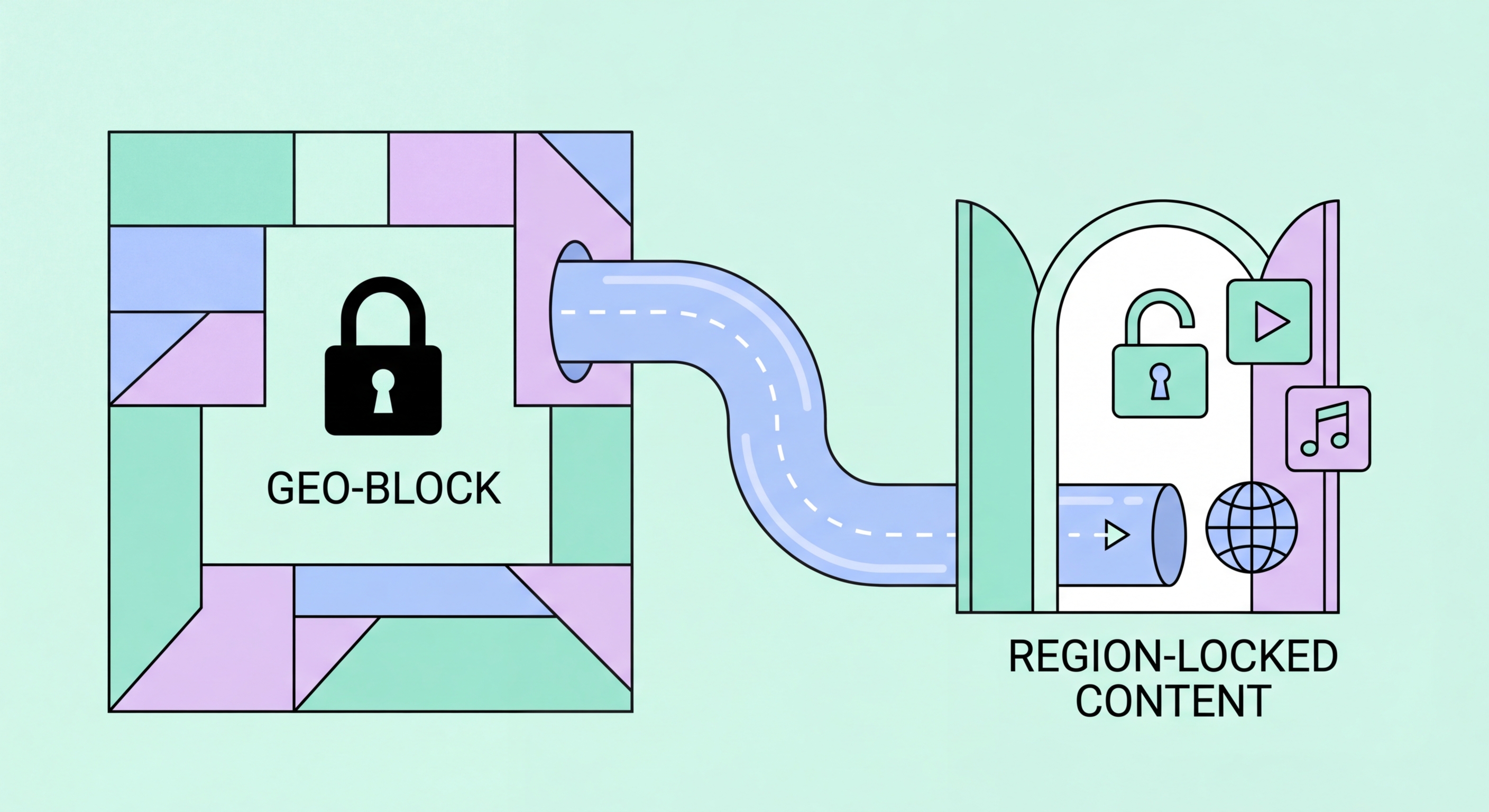
How geo-blocking technology works
2What You Can Access

Content and Services Accessible from Hong Kong via Proxy

For Hong Kong internet users, geo-restriction bypassing via proxy is relevant across several categories of content and services. The most common use case is accessing international streaming content libraries that differ from Hong Kong's local library. Netflix maintains different content catalogs in different countries; the US library is typically the largest, while UK Netflix has exclusive BBC content and other British productions. Japanese Netflix has extensive anime and local drama content. Accessing any of these alternate libraries requires appearing as a user connecting from within that country.

Online gaming services and platform storefronts also use geographic restrictions, particularly for region-exclusive game releases, digital content (DLC and add-ons not released in all markets), and beta access programs that are geo-gated during rollout. Some game publishers and platform operators restrict early access to specific regions, and gamers often use proxies to access content available in other markets before their own regional release. Price differences between regional game stores also motivate proxy use for digital purchases, as gaming platform prices vary significantly across regional storefronts.

Business and research use cases are particularly relevant Hong Kong Businesses: Implementation Guide">for Hong Kong Online Banking: What You Need to Know">for Hong Kong Online Banking: A Complete Guide">for Hong Kong SMEs: Where to Start">for Hong Kong users. Journalists and researchers monitoring international news often need to access local news websites and services that restrict to national audiences. Travel industry professionals need to see flight and hotel prices as domestic consumers in various countries see them — prices that are often different from what international visitors see. Financial professionals monitoring international markets need to access data services that restrict certain feeds or datasets to licensed geographic territories. For these professional purposes, geographic proxy access is a legitimate and common business practice.

  • Streaming Libraries: US Netflix, BBC iPlayer, Disney+ regional catalogs, and Japanese streaming services.
  • Gaming Storefronts: Region-exclusive releases, regional DLC, and geographical price differences in platform stores.
  • Sports Broadcasts: Regional sports streaming services with broadcasting rights restricted to specific territories.
  • International News: National broadcaster archives and domestic-only news streaming services.
  • Travel Pricing: Domestic flight and hotel prices as seen by local consumers in target markets.
  • Financial Data: Geographic restrictions on market data feeds, financial services, and trading platform access.
What you can access from Hong Kong with proxies
3Practical Methods

Practical Methods for Bypassing Geo-Restrictions

The choice of method for bypassing geo-restrictions depends on the sophistication of the target service's detection systems and the reliability you need. For casual, occasional access to less-defended content — regional news sites, some YouTube videos, public broadcaster archives — a simple browser proxy extension configured with a datacenter proxy in the target country may work reliably. These services typically perform basic IP geolocation checks without additional bot detection signals, making simple proxy use sufficient.

For accessing major streaming platforms with sophisticated detection systems — Netflix, Disney+, BBC iPlayer, Amazon Prime Video — the approach needs to be more sophisticated. These platforms actively identify and block datacenter IP ranges and update their blocklists continuously. The approaches that work most reliably are: premium VPN services with dedicated streaming servers (these services invest specifically in maintaining streaming-accessible IP addresses), residential proxies from target countries (trusted consumer IPs are harder to detect and block), or Smart DNS services (which reroute only the geographic detection signals rather than all traffic). The most reliable current option for streaming specifically is a premium VPN rather than a standard proxy.

For business use cases requiring geographic access at scale — monitoring prices in multiple markets, verifying ad delivery, checking search rankings from specific cities — rotating residential proxy pools from providers like Smartproxy, Oxylabs, or Bright Data provide the necessary geographic precision and reliability. These services provide genuine residential IPs in specific cities worldwide, city-level targeting through their APIs, and session management that maintains geographic consistency across a sequence of related requests. This is the professional-grade approach for geographic access at scale.

  • Simple Sites: Browser proxy extension with datacenter proxy for basic geo-access to undefended regional content.
  • Streaming Platforms: Premium VPN with streaming-dedicated servers or residential proxies for defended streaming sites.
  • Smart DNS: Reroutes only geographic detection signals — faster than full proxy but only works for IP-based geo-blocks.
  • Business Scale: Rotating residential proxy pools with city-level targeting for professional geographic data collection.
  • Testing First: Test your chosen method against the target site before relying on it — success rates vary by provider and target.
  • Account Consistency: Maintain consistent geographic proxy settings if logged into accounts to avoid triggering suspicious location alerts.
Methods for bypassing geo-restrictions
4Legal and Ethical Use

Legal and Ethical Boundaries for Geo-Restriction Bypass

Bypassing geographic restrictions via proxy is generally legal in Hong Kong as a technical act, but it may violate the Terms of Service of specific platforms you access, and in some cases may infringe on copyright by accessing content outside the licensed territory. Netflix's Terms of Service, for example, prohibit accessing content from regions where you don't hold an active subscription. The practical legal risk to individual consumers from personal, non-commercial geo-bypass is historically very low — enforcement actions against individuals for personal streaming are essentially unheard of, and the legal boundaries are not definitively settled.

For business purposes, geo-restriction bypass for competitive intelligence, market research, and ad verification is widely practiced and generally accepted by the business and legal community as legitimate. The distinction is between accessing publicly available commercial information (pricing, search results, publicly displayed advertising) and accessing paid or licensed content you don't have the right to access. Checking competitor pricing from a proxy in Japan is commercially sensible and lawful. Accessing Japanese streaming content without a Japanese subscription is technically a ToS violation even if enforcement risk is low.

The ethical dimension is worth considering beyond strict legality. Geographic pricing differentials often reflect local economic conditions and purchasing power — buying software or services at a lower regional price from a region you don't reside in or pay taxes in takes advantage of pricing structures designed for local economic contexts, potentially impacting the sustainability of regional pricing models. For streaming specifically, bypassing geographic licensing structures reduces the value of those licensing arrangements and could affect content availability in your actual market. Being thoughtful about the difference between accessing information (low ethical impact) and consuming paid content outside its licensed territory (higher ethical consideration) is reasonable for conscientious users.

  • Legality in HK: Geo-bypass is technically legal in HK — enforcement against individuals for personal use is extremely rare.
  • ToS Violation: Most streaming platforms' Terms of Service prohibit geo-bypass — civil risk, not criminal.
  • Business Intelligence Legal: Geographic proxy use for market research, pricing intelligence, and ad verification is commercially accepted practice.
  • Content Licensing Ethics: Accessing paid content outside its licensed territory has higher ethical implications than accessing public information.
  • Regional Pricing: Purchasing software or services at lower regional prices from non-resident regions exploits pricing structures.
  • Practical Risk: Individual enforcement risk for personal non-commercial geo-bypass remains negligible as of 2026.
Full guide to proxy laws in Hong Kong →
Legal and ethical geo-restriction bypass

Ready to Access More Content From Hong Kong?

Compare proxy providers with geographic coverage in your target regions and find the right solution for your access needs.

Related VPN Articles