WhatsApp Scams in Hong Kong: Types and How to Avoid

WhatsApp's near-universal adoption in Hong Kong makes it the most actively exploited messaging platform for scams — from family impersonation and investment fraud to fake job offers and account takeovers.

WhatsApp scams in Hong Kong illustration
1Why WhatsApp Is Targeted

Why WhatsApp Is the Primary Scam Platform in Hong Kong

WhatsApp is used by an estimated 90% of Hong Kong's smartphone-owning population for personal, family, and work communications. This extraordinary penetration rate makes it uniquely valuable to scammers: a message arriving on WhatsApp carries an implicit social trust that email does not — the recipient typically assumes the message comes from someone they know, or at minimum from a legitimate business contact. Scammers exploit this trust systematically, using WhatsApp as a delivery mechanism for attacks that would be far less convincing sent by email.

The technical characteristics of WhatsApp also favour attackers. Unlike email, WhatsApp shows the sender's display name and profile photo rather than an underlying address — and both can be trivially spoofed. A scammer who knows your contact's name and has found their profile photo from social media can create a WhatsApp account that appears identical to the genuine contact, especially since Your Phone Number">phone numbers used by scammers are often unfamiliar to the victim. The brevity of messaging also discourages the careful scrutiny that a longer email might receive, and the conversational format creates a social pressure to respond quickly rather than reflect.

Hong Kong's business culture compounds the risk. WhatsApp is widely used for professional communications — between colleagues, between businesses and clients, between employers and staff — in ways that would be unusual in some other markets. This means scam scenarios involving urgent requests from apparent bosses, clients, or business partners are highly plausible and frequently successful. The HKPF Cyber Security and Technology Crime Bureau consistently identifies WhatsApp as a leading channel for fraud in Hong Kong, with tens of thousands of cases reported annually across multiple scam typologies.

  • Near-universal adoption: ~90% of HK smartphone users use WhatsApp — attacker reaches most potential victims via single platform
  • Implicit social trust: WhatsApp messages are assumed to come from known contacts — more trusted than email by default
  • Display name spoofing: Attacker can match a known contact's name and photo — no underlying address to verify
  • Business use normalised: Professional WhatsApp communications make work-context scams highly plausible
  • Brevity creates urgency: Short message format discourages careful reflection before responding
  • HKPF top-reported channel: WhatsApp fraud consistently among the most reported cybercrime categories in HK
How social engineering drives WhatsApp scams →
WhatsApp scam mechanism in Hong Kong
2The Main Scam Types

The Most Common WhatsApp Scam Types in Hong Kong

Family impersonation scams — sometimes called the "son/daughter in trouble" or "Mum/Dad, it's me" scam — are among the most frequently reported WhatsApp frauds in Hong Kong. The scammer contacts a parent from an unfamiliar number, claiming their child has lost their phone, been in an accident, or been detained, and urgently needs money transferred. The emotional shock and urgency are designed to bypass scepticism. Because the contact comes via WhatsApp, and the display name can mimic the child's, the deception is often convincing enough to result in immediate FPS or bank transfers before the victim thinks to call their child directly.

Boss impersonation scams target employees, typically requesting urgent and confidential bank transfers or gift card purchases. The scammer claims to be the CEO, managing director, or a senior manager, contacting the target from a new number — plausibly explained as a temporary phone while travelling or after losing their regular handset. The scenario involves a time-sensitive business payment or a confidential transaction that must be completed immediately without following normal approval procedures. These attacks are particularly effective against finance, accounting, and executive assistant roles in Hong for Hong Kong Businesses">Kong businesses, and can result in six-figure losses in a single transaction.

Investment scams on WhatsApp typically begin with an unsolicited contact that escalates gradually into a relationship before introducing an investment opportunity. The initial contact may appear accidental — a message "sent to the wrong number" — but quickly develops into a friendly or romantic relationship over weeks or months. Once trust is established, the scammer introduces a guaranteed high-return investment, often in cryptocurrency or foreign exchange, on a platform they control. Victims make initial investments, see apparent profits, and invest larger sums before attempting withdrawal reveals the platform is fraudulent. This approach, sometimes called "pig butchering" (sha zhu pan), results in some of the largest individual financial losses from any scam type in Hong Kong.

  • Family impersonation: Child/relative in trouble, needs urgent money — targets emotional response before rational verification
  • Boss impersonation: Urgent confidential bank transfer request from apparent CEO/manager — targets finance staff
  • Investment scams: Trust-building followed by fake investment platform — often cryptocurrency or forex
  • Pig butchering: Extended relationship-building scam ending in complete loss of invested funds
  • Job scams: Fake part-time job offers via WhatsApp — leads to upfront payment or credential theft
  • Account takeover: Verification code requests — if victim shares OTP, attacker takes over their WhatsApp account
Investment scams and pig butchering in Hong Kong →
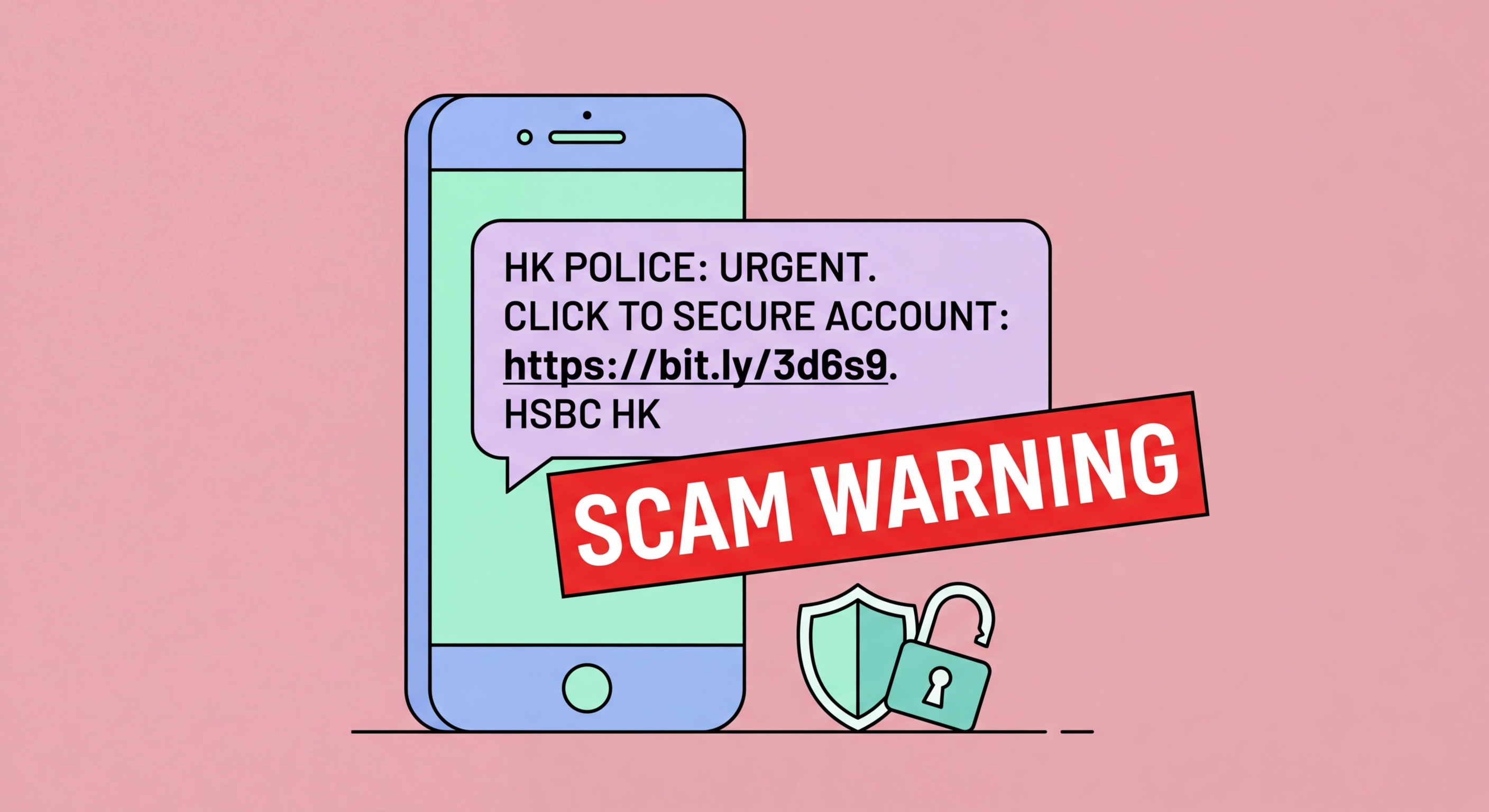
Common WhatsApp scam types Hong Kong family boss investment
3Account Takeover Scams

WhatsApp Account Takeover: How It Works and How to Prevent It

WhatsApp account takeover is a scam that does not require the attacker to impersonate someone from outside — instead, it gives the attacker control of a real WhatsApp account belonging to someone the victim knows. The mechanism exploits WhatsApp's phone number verification system. When WhatsApp is installed on a new device, it sends a six-digit verification code via SMS to the registered phone number. An attacker who wants to hijack an account contacts the victim claiming to need a verification code that was accidentally sent to them, often framing this as a technical error. If the victim shares the code, the attacker immediately registers the account on their own device, locking the legitimate owner out.

Once the account is hijacked, the attacker has access to all existing conversations, the contact list, and the trusted identity of the account holder. They can immediately message all contacts requesting money urgently — and because the messages genuinely come from the compromised account, the recipients see the real name and profile photo. The attacker often continues for hours before the original account holder realises what has happened and can warn their contacts. In the time available, multiple contacts may transfer money before any warning is issued. Hong Kong HKCERT and HKPF have both documented significant financial losses from WhatsApp account takeover chains, where a single hijacked account enables fraud against multiple victims.

Prevention is straightforward but requires knowing to take action. Enable Two-Step Verification in WhatsApp Settings (Account → Two-Step Verification) — this adds a PIN that must be entered when registering the number on a new device, blocking takeover even if an attacker obtains the SMS verification code. Never share a WhatsApp verification code with anyone, for any reason — no legitimate scenario requires you to share this code with a third party. If your account is hijacked, re-register immediately by installing WhatsApp on your phone and requesting a new verification code, which will expire the attacker's session. Then warn all your contacts that messages from your account in the recent period may have been fraudulent.

  • Takeover mechanism: Attacker tricks victim into sharing SMS verification code — immediately registers account on attacker's device
  • Contact exploitation: Attacker uses hijacked account to request money from all contacts — messages appear genuine
  • Enable Two-Step Verification: WhatsApp Settings → Account → Two-Step Verification — adds PIN protection against takeover
  • Never share verification codes: No legitimate reason exists for sharing a WhatsApp OTP with any third party
  • Re-register to recover: Install WhatsApp and request new code — this expires attacker's session immediately
  • Warn contacts immediately: Once recovered, message contacts to disregard any requests received during the hijack window
Reporting WhatsApp fraud to HKPF and HKCERT →
WhatsApp account takeover prevention Hong Kong
4Protection and Response

How to Protect Yourself from WhatsApp Scams in Hong Kong

The most effective protection against WhatsApp scams is a simple verification habit: whenever you receive an unexpected request for money, personal information, or any action that feels unusual — regardless of who the message apparently comes from — call the sender on their known phone number before acting. This one step breaks the majority of WhatsApp scams, because scammers cannot answer a call to the real person's number. Even if the WhatsApp account is genuine but has been hijacked, a phone call to the original number will reveal the discrepancy. This call-back rule should be applied as standard practice for any financial request, no matter how urgent the message makes it seem.

Be specifically alert to any WhatsApp contact from an unfamiliar number that claims to be someone you know. Legitimate family members, friends, and colleagues generally contact you from their established number — a message from a "new number" claiming to be a known person should trigger immediate verification via a voice call to their actual number. Be equally sceptical of first-contact messages from unknown numbers that gradually build familiarity before introducing financial opportunities. If someone you do not know contacts you on WhatsApp and eventually steers the conversation toward investment, cryptocurrency, or financial products, this is a hallmark pattern of pig butchering and other investment scams.

If you have transferred money to a scammer via FPS or bank transfer as a result of a WhatsApp scam, act immediately — there is a narrow window in which banks may be able to intercept the transfer. Call your bank's fraud line immediately, not through any number in the WhatsApp message but through the number on the back of your card or the official bank website. Report the WhatsApp scam to HKPF at 182 388, and to the Anti-Deception Coordination Centre at 18222, which specifically handles fraud in progress. Report to HKCERT at hkcert.org/report. Preserve the conversation screenshots and any details about the recipient account, as these will be needed for the police report.

  • Call back rule: Any unexpected request via WhatsApp — call the sender on their known number before acting
  • New number scepticism: Someone claiming to be a known contact from an unfamiliar number — always verify by phone call
  • Investment contact red flag: Unknown contact that builds relationship then introduces investment opportunity — pig butchering pattern
  • Enable Two-Step Verification: Protects your own account from being hijacked and used against your contacts
  • Immediate response to fraud: Call bank and ADCC (18222) immediately — narrow window for transfer interception
  • Preserve evidence: Screenshot conversations before reporting — needed for HKPF and bank fraud investigation
Understanding social engineering tactics used in scams →
How to protect yourself from WhatsApp scams in Hong Kong

Verify Before You Act — Call Back on a Known Number

A single phone call to verify any unexpected WhatsApp request prevents the vast majority of WhatsApp scams targeting Hong Kong residents.

Related VPN Articles