VPN for Streaming: Unblock Netflix, Disney+ & More
Geo-restrictions lock the best content behind invisible walls. A streaming VPN tears them down — giving you access to libraries from the US, UK, Japan, and beyond.
Published: March 29, 2026
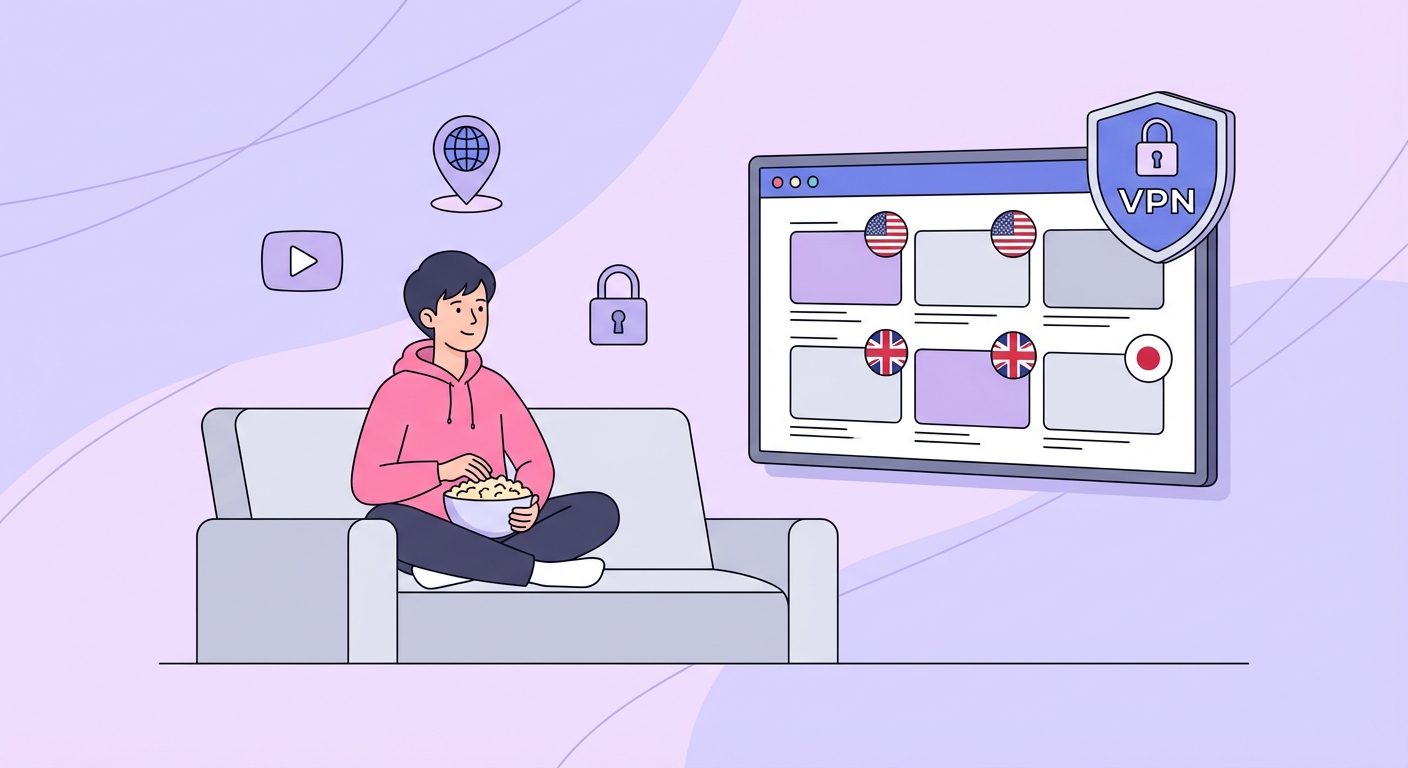
Geo-restrictions lock the best content behind invisible walls. A streaming VPN tears them down — giving you access to libraries from the US, UK, Japan, and beyond.
Published: March 29, 2026
When Netflix, Disney+, or any major streaming platform licences content, those licences are almost always territorial. A studio sells the streaming rights to a particular film or series separately for each country or region — often to different companies with different services. This means Netflix may have purchased the rights to a particular show for the US but not for It Protects and How to Use It">on Public WiFi: Why It's Essential in Hong Kong">Hong Kong, where a local broadcaster holds the exclusive rights.
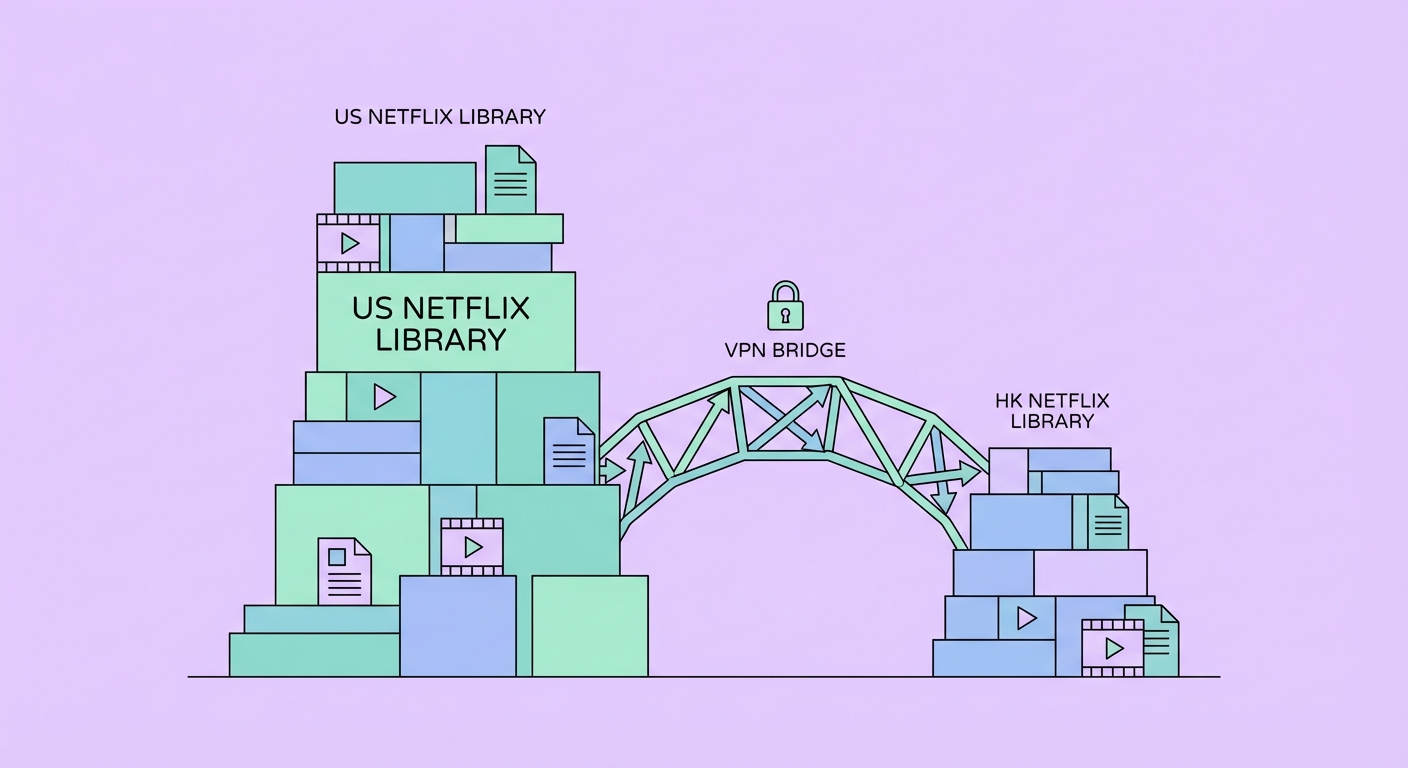
Geographic restriction (geo-blocking) is implemented by checking the IP address of incoming connections. Every IP address is registered to a specific country through regional internet registries. When you visit Netflix.com, Netflix's servers instantly check your IP ↗, identify your country, and serve you only the content licenced for that territory. The difference in library size is dramatic: as of 2026, US Netflix has approximately 5,800 titles; Hong Kong Netflix has around 3,200 — nearly 2,600 titles are simply unavailable to HK subscribers paying the same monthly fee.
A VPN solves this by routing your connection through a server in the target country. When you connect to a US VPN server, Netflix sees a US IP address and serves you the full US library — even though you're physically in Kowloon. This is technically a breach of Netflix's terms of service, though Netflix's response has been to attempt blocking VPN IP ranges rather than pursuing individual users. Quality streaming VPNs continuously update their server infrastructure to stay ahead of these blocks.
Not all VPNs can unblock streaming platforms — Netflix and Disney+ run sophisticated VPN detection systems that block IP ranges associated with data centres. Only providers that invest in continuously refreshing their server IP pools can reliably unblock these services. Here are the providers with the best track records for streaming, tested from Hong Kong in 2026.
ExpressVPN is the most consistent Netflix unlocker, working reliably with US, UK, Canadian, Australian, and Japanese Netflix libraries. Its MediaStreamer DNS service also allows unblocking on devices that don't natively support VPN apps (Apple TV, gaming consoles, smart TVs). NordVPN operates dedicated streaming-optimised servers labelled with the streaming services they support, removing the guesswork of which server to use. Surfshark consistently unblocks the widest range of Netflix regions and is particularly strong for Disney+ US, which is more aggressively blocked than Netflix.
For BBC iPlayer, the service is aggressive about blocking VPN IPs, and most VPNs fail. ExpressVPN and NordVPN are the two most reliable options for UK iPlayer access from Hong Kong. Hulu (US-only) is similarly difficult — ExpressVPN and Surfshark work most consistently. For Amazon Prime Video, almost any quality VPN works, as Prime's geo-detection is less aggressive than Netflix's.
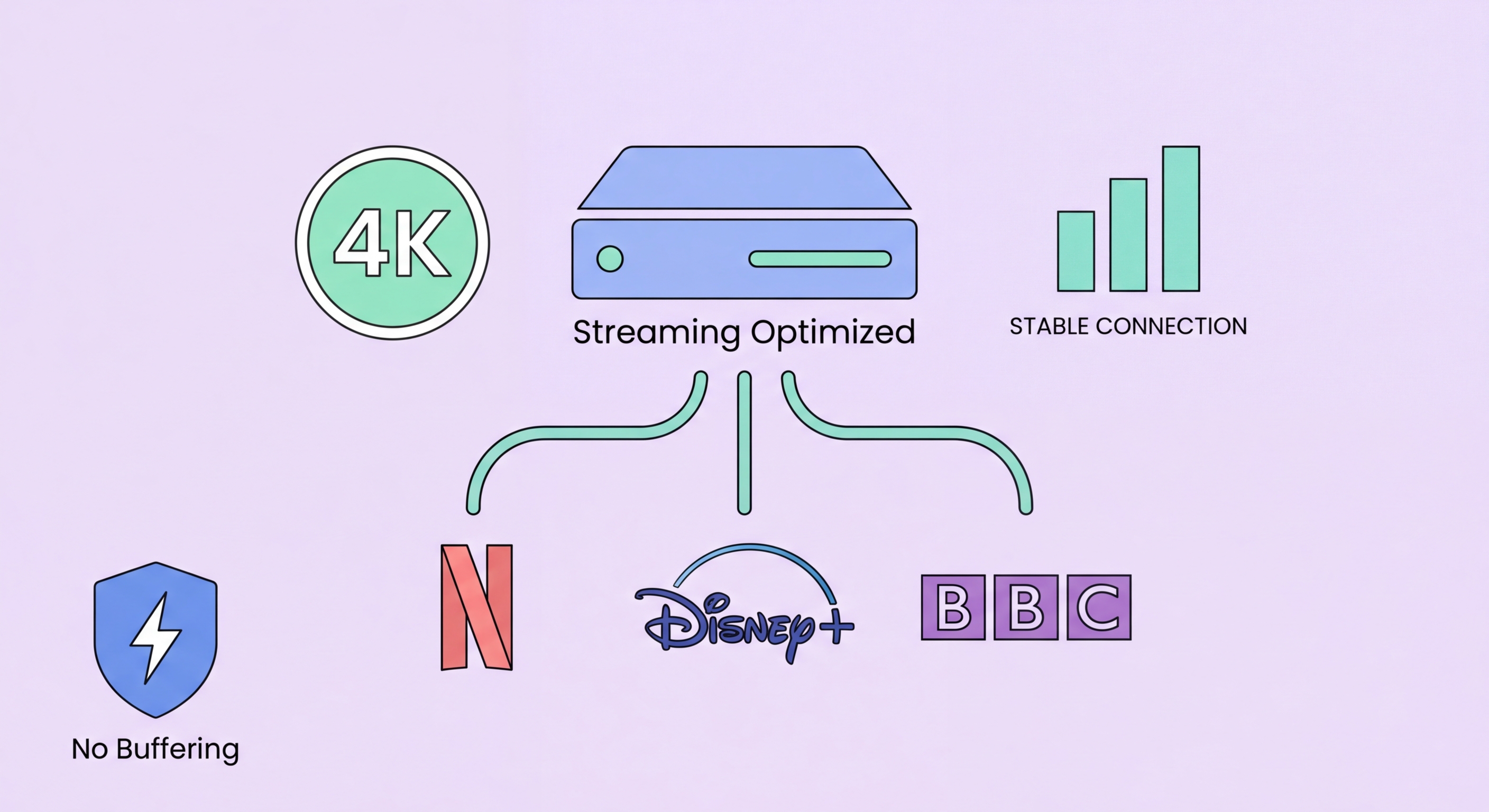
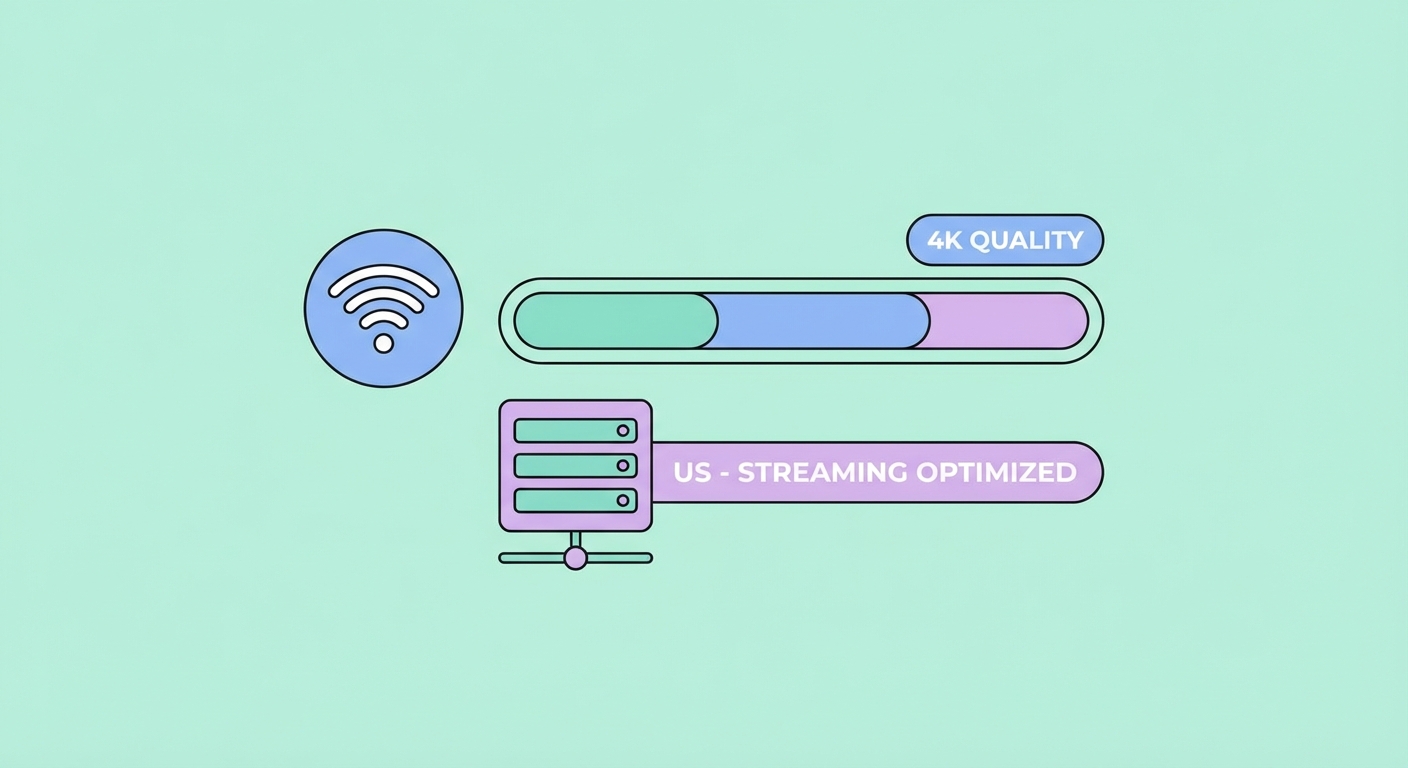
Streaming quality depends on both your base internet speed and the overhead introduced by the VPN. For Netflix 4K Ultra HD, you need a sustained 25 Mbps connection. For regular HD (1080p), 5 Mbps is sufficient. A well-configured VPN using WireGuard on a nearby server typically adds only 5–15% overhead — meaning if your HKBN or SmarTone connection delivers 100 Mbps, you'll have well above the threshold needed for 4K streaming on multiple devices simultaneously.
Server selection is the single biggest factor in VPN streaming performance. For US Netflix, choose a server in a major US city with low load — not the nearest server to HK (which would be Singapore), but the nearest high-capacity server to the Netflix US content delivery network. Most VPN apps show server load percentages; aim for servers below 50% capacity. For UK content, London servers are fastest. For Japanese anime on AbemaTV or DAZN Japan, select Tokyo servers.
If you experience buffering, try these troubleshooting steps in order: switch from UDP to TCP protocol (more stable on congested networks), try a different server in the same country, switch to WireGuard if not already using it, check that the VPN app isn't running in low-power mode on mobile, and restart both the VPN app and the streaming app. Using a wired ethernet connection instead of WiFi also dramatically reduces streaming interruptions.
From Hong Kong, a quality VPN opens access to an enormous range of streaming content unavailable in the local library. The most valuable unlockable service is US Netflix — the largest library in the world with exclusive originals unavailable elsewhere. But the opportunity extends far beyond Netflix: UK BBC iPlayer offers full access to BBC One, Two, Three, and Four programming completely free of charge (requiring only a UK VPN connection), including same-day broadcast of all BBC content.
South Korean streaming deserves special mention for HK audiences: Wavve and Tving offer extensive K-drama and variety show libraries that don't appear on Netflix HK, at far lower subscription costs than international equivalents. Japanese streaming platforms including AbemaTV (free with ads), DAZN Japan (combat sports, football), and NHK World give access to live Japanese TV, anime simulcasts, and J-League football. US sports fans can use a VPN to access NBA League Pass at its cheapest regional pricing.
For sports specifically, the geo-arbitrage opportunity is significant. The same UFC PPV that costs HK$300+ on a local platform may be available on ESPN+ US for far less with a US VPN connection. UK Sky Sports passes, Irish GAAGAA streaming, and Australian Foxtel Now each offer sports coverage unavailable anywhere else — and all are accessible from Hong Kong with a VPN pointing to the right country's servers.