Using a Proxy for Streaming: What You Need to Know
Proxies can bypass geo-restrictions on some streaming content, but the major platforms have invested heavily in proxy detection. Here's what works, what doesn't, and why.
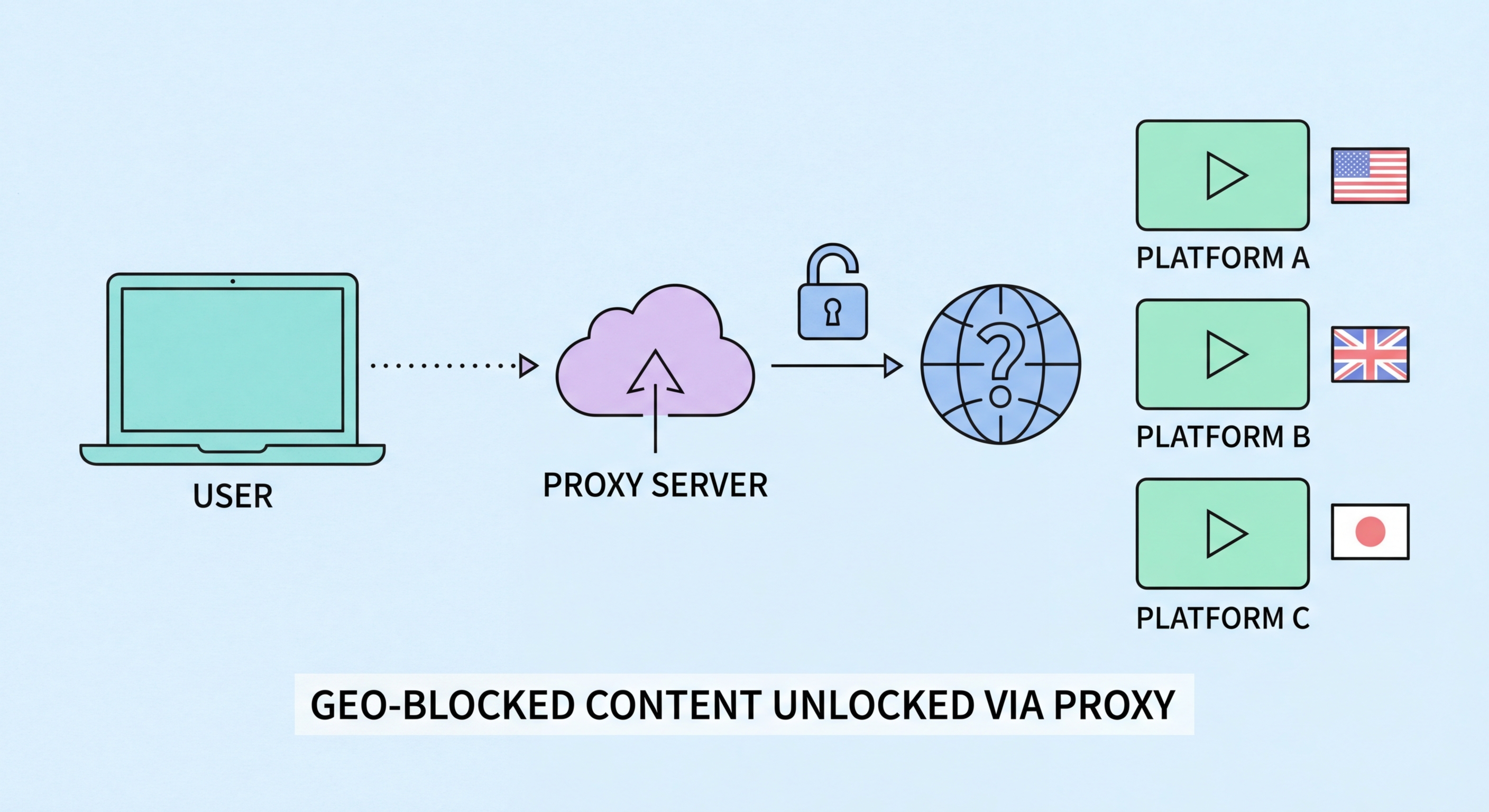
Proxies can bypass geo-restrictions on some streaming content, but the major platforms have invested heavily in proxy detection. Here's what works, what doesn't, and why.
Geographic content restrictions on streaming platforms aren't arbitrary — they exist because of copyright licensing agreements. When Netflix, Disney+, or Amazon Prime Video acquire streaming rights to a movie or TV show, those rights are typically licensed on a territory-by-territory basis. A production company may have sold US streaming rights to Netflix, UK rights to Sky, and Australian rights to Stan. Each platform can only legally stream content in the territories where it holds the license. Geographic IP checking is the mechanism used to enforce these contractual obligations.
The geo-blocking system works by checking your IP address against a database of known IP geolocation data. When you connect to Netflix, the platform looks up your IP address, determines your country of origin, and serves only the content library licensed for that territory. The Hong Kong Netflix library differs from the US library — some content available in the US isn't licensed for HK streaming, while some locally relevant content in the HK library may not be available globally. This is why HK viewers wanting access to the full US library (which is consistently the largest) look for tools to appear as a US user.
Streaming platforms are fully aware that users attempt to bypass geo-restrictions and have invested in increasingly sophisticated detection systems. Netflix, in particular, launched a major anti-proxy campaign in 2016 that blocked most VPN and proxy IP ranges at that time. Since then, an ongoing technical arms race has developed between proxy/VPN providers seeking to maintain streaming access and platforms constantly identifying and blocking the IP ranges being used. Today, only a subset of premium services can reliably unblock major streaming platforms.

While both proxies and VPNs can in principle change your apparent geographic location for streaming access, VPNs have several practical advantages for this use case. First, VPNs encrypt all traffic including metadata about which streaming service you're connecting to — making it harder for streaming platforms to detect the pattern of connections that signals proxy or VPN use. A bare proxy connection leaves more identifiable metadata visible to the platform.
Second, premium VPN services have invested specifically in streaming unblocking technology, including regularly refreshed IP addresses, residential-IP-backed servers, and proprietary traffic obfuscation techniques. Services like ExpressVPN, NordVPN, and Surfshark maintain dedicated streaming servers that are continuously updated as platforms detect and block previous IPs. Most general-purpose proxy providers do not make the same streaming-specific investment because their primary market is business data collection, not consumer streaming.
Third, residential proxies — the type most likely to bypass streaming detection — are priced per gigabyte of data. Streaming video consumes 3–25 GB per hour depending on quality. Using residential proxies for regular streaming would cost hundreds to thousands of dollars per month — economically unviable for a personal user. A VPN subscription at HK$50/month with unlimited bandwidth is far more practical for the streaming use case, even if the underlying proxy technology is theoretically superior for detection avoidance.

Not all streaming content is protected by the same level of geo-restriction enforcement. While Netflix, Disney+, and BBC iPlayer have invested significantly in proxy and VPN detection, many other content sources are less defended and can be accessed reliably with a standard datacenter proxy. This includes many live sports streaming websites, regional news channels, national broadcaster catch-up services in smaller markets, and IPTV services targeting diaspora communities.
YouTube content restrictions vary significantly by video. Some YouTube videos are blocked in specific countries due to licensing or content rules but accessible elsewhere — a datacenter proxy in the appropriate country can unblock these without triggering YouTube's anti-proxy systems, which are less aggressive than Netflix's. Similarly, some social media platforms restrict live streams or video content to specific regions — TikTok, Instagram Live, and Twitch geographic blocks are generally less strictly enforced and may be bypassed by a standard HTTP proxy.
for Hong Kong Online Banking: What You Need to Know">for Hong Kong Online Banking: A Complete Guide">for Hong Kong SMEs: Where to Start">For Hong Kong users, proxies are most reliably useful for accessing mainland China streaming content — platforms like iQiyi, Youku, and Bilibili serve different content libraries to mainland Chinese IP addresses. Accessing the full mainland Chinese library from HK may require a China-based IP address, and datacenter proxies with mainland China IPs from providers like Alibaba Cloud can provide this access, though some platforms may still require mainland Chinese phone number verification for account creation.

If you've decided to use a proxy for streaming access, the most common setup is a browser-level proxy configured through the browser's network settings or via a proxy extension. For Chrome and Edge, you can configure a system proxy in Windows or macOS settings, or use an extension like Proxy SwitchyOmega to manage multiple proxy profiles with easy switching. Firefox allows direct proxy configuration within the browser without affecting other applications.
For streaming services that have dedicated desktop or mobile applications rather than browser-based access, proxy configuration may not be available within the app itself. In these cases, you need to configure a system-wide proxy (on Windows through Settings → Network → Proxy; on macOS through System Settings → Network → Proxies) or use a tool that forces all app traffic through a specified proxy address. Note that some streaming apps detect system proxy settings and refuse to connect through them as a proxy detection measure.
Smart DNS is a related technology worth understanding: rather than routing all traffic through a proxy, Smart DNS selectively reroutes only the DNS queries and geographic detection requests that streaming services use to determine your location, leaving all other traffic unaffected. This makes it faster than a full proxy for streaming and often more reliable against detection, since your actual IP address is used for the video stream data. Several commercial services offer Smart DNS specifically for streaming, at lower monthly cost than a full VPN.
