Everything You Need to Know About eSIM in Hong Kong
From what eSIM technology is to choosing the best provider for local use and international travel — 22 expert articles covering every aspect of eSIM for Hong Kong residents in 2026.
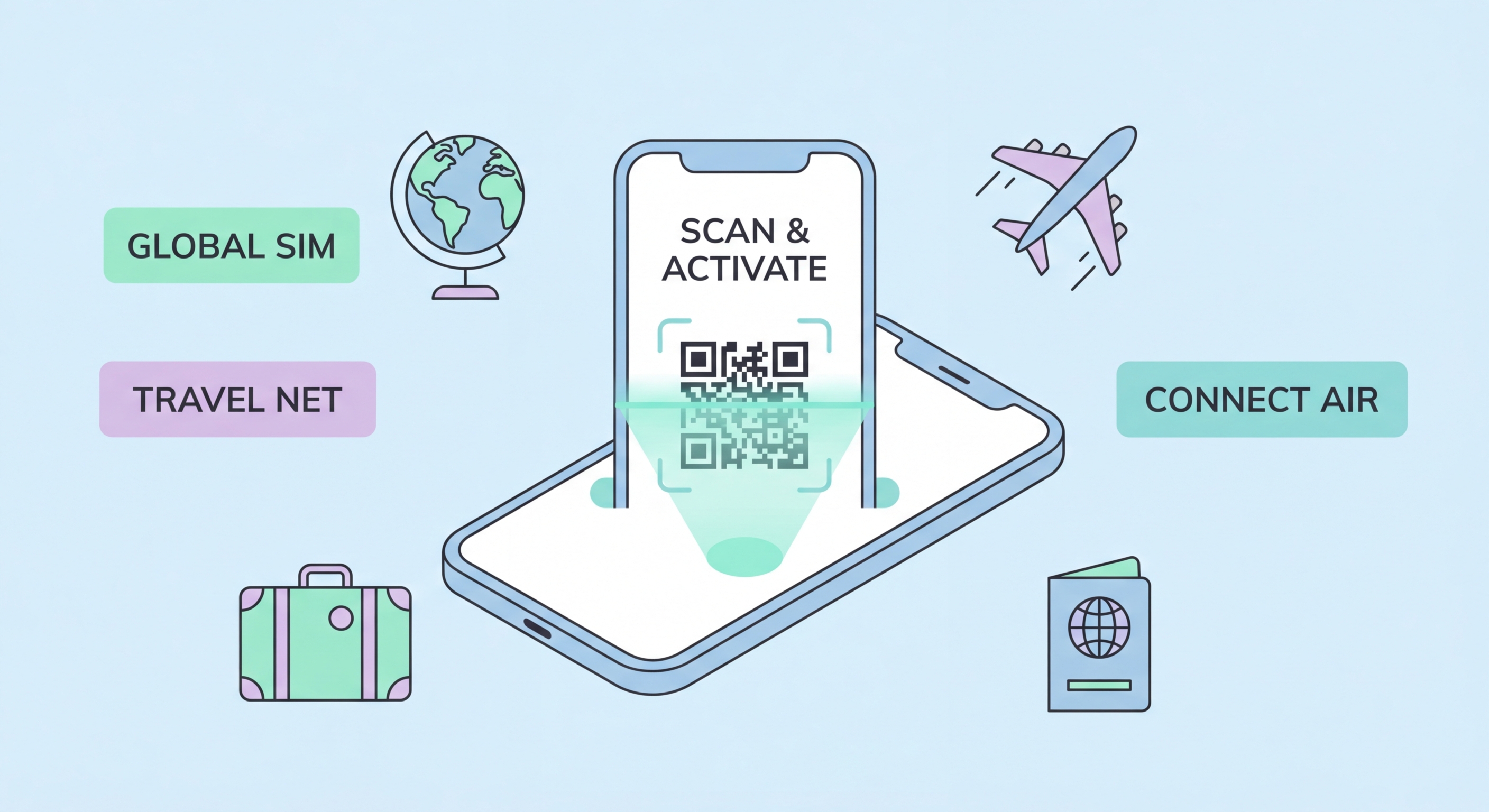
From what eSIM technology is to choosing the best provider for local use and international travel — 22 expert articles covering every aspect of eSIM for Hong Kong residents in 2026.
SIM cloning, theft risk, and remote management — eSIM vs physical SIM security.
Top eSIM plans for visiting Japan from Hong Kong — coverage, speed, and pricing.
eSIM (embedded SIM) is a programmable SIM chip built directly into your device during manufacturing, eliminating the need for a physical SIM card. Instead of inserting a plastic card provided by your carrier, an eSIM is programmed remotely with your carrier's profile through a QR code or activation code. You can switch carriers, add travel plans, and manage multiple numbers entirely through software — no physical SIM swapping required. Hong Kong has been at the forefront of eSIM adoption in Asia, with all major carriers (3HK, CMHK, SmarTone, csl) offering eSIM plans and all current-generation smartphones supporting the technology.
For Hong Kong residents who frequently travel to mainland China, Japan, South Korea, and other Asia-Pacific destinations, eSIM has transformed the travel connectivity experience. Instead of buying a physical SIM at the destination airport, travelers can purchase and activate a data eSIM before departure, arriving with connectivity already set up. The ability to maintain a Hong Kong number on the physical SIM while using a local data eSIM abroad — dual SIM functionality — eliminates the choice between affordable data and keeping your primary number available for calls.
From a security perspective, eSIM introduces both improvements and new considerations compared to physical SIM cards. The elimination of the physical card removes the risk of SIM theft and physical cloning, which are significant attack vectors for physical SIMs. However, eSIM's remote provisioning capability creates new attack surfaces — SIM swap attacks can potentially occur without physical access to the device or carrier store, though carrier authentication requirements make this more challenging than for physical SIM swaps. Understanding the security implications of eSIM is important for Hong Kong users who use their phone number as a second factor for banking and financial services.

eSIM technology includes several security improvements over physical SIM cards. The GSMA's eSIM specifications (SGP.02 for M2M and SGP.22 for consumer devices) include mandatory encryption and authentication requirements for all eSIM provisioning operations. When you download a carrier profile to your eSIM, the transaction is authenticated using public key cryptography — only your device's specific eSIM can download the profile intended for it, and the profile is encrypted in transit. This is a significant improvement over physical SIM card provisioning, which involves no cryptographic authentication of the card itself.
SIM swap fraud — where an attacker convinces a carrier to transfer your phone number to a SIM they control — remains a concern with eSIM, though the attack requires different tactics. Physical SIM swaps require a fraudster to social engineer a carrier store employee into issuing a replacement SIM. eSIM transfers can potentially be initiated remotely if an attacker gains access to your carrier account online, making strong carrier account passwords and enabling two-factor authentication on your carrier account critically important. All major Hong Kong carriers allow customers to add PIN locks and account passwords that must be provided before any SIM-related changes are processed.
For Hong Kong users who use SMS-based two-factor authentication for banking, financial services, and email, eSIM security directly impacts account security. A successful SIM swap — whether against a physical SIM or eSIM — would allow an attacker to receive your SMS authentication codes. This is why security experts recommend migrating away from SMS-based 2FA to authenticator apps (Google Authenticator, Authy, hardware tokens) wherever possible. Banking apps like HSBC HK and Hang Seng Bank Mobile Banking provide their own in-app authentication that does not rely on SMS and is therefore immune to SIM swap attacks regardless of SIM type.

All four major Hong Kong carriers — 3HK, China Mobile Hong Kong (CMHK), SmarTone, and csl (HKT) — offer eSIM plans for local subscribers. The activation process for each typically involves downloading the carrier's app, selecting an eSIM plan, and scanning a QR code provided within the app. For existing customers switching their physical SIM to eSIM, most carriers allow the switch to be processed online or in-store without changing your existing plan or number. The eSIM profile download typically takes 30–60 seconds on a good WiFi connection.
3HK offers eSIM across its full range of postpaid and prepaid plans, including its popular Data SIM plans that are widely used by both locals and visitors. CMHK's eSIM offerings are particularly notable for users who travel to mainland China, as CMHK's parent China Mobile operates the largest network in China and CMHK plans often include competitive mainland China roaming packages. SmarTone provides eSIM with some of the most competitive unlimited data plans in Hong Kong, and its network sharing with PCCW provides broad indoor coverage across the territory. csl/HKT's eSIM plans benefit from HKT's extensive enterprise infrastructure and tend to provide strong business customer support.
In addition to the major Hong Kong carriers, MVNOs (Mobile Virtual Network Operators) operating on HK networks — including Birdie Mobile, SUNeVision, and others — offer eSIM plans that can provide lower-cost alternatives for data-only use cases. International eSIM providers like Airalo, Holafly, Saily, and Roamless also serve Hong Kong users primarily for travel use cases, providing eSIM data plans for destinations worldwide at prices significantly below traditional roaming charges. These international providers do not provide Hong Kong local numbers — they are data-only services suitable for travel connectivity rather than replacing your primary HK carrier subscription.

Travel eSIMs have fundamentally changed international roaming economics for Hong Kong residents. Traditional carrier roaming charges from Hong Kong carriers can reach HK$30–80 per day for flat-rate roaming add-ons, or far more on pay-per-use rates. International eSIM providers like Airalo, Holafly, Saily, and Roamless offer destination-specific data eSIMs for popular travel destinations at prices that are typically 60–80% lower than carrier roaming charges. A 5GB Japan data eSIM from Airalo, for example, typically costs USD $5–8 (HK$40–65) and provides high-speed NTT Docomo or Softbank network access for a week or more of typical use.
The primary advantage of travel eSIM over destination SIM purchasing is convenience — you can purchase and download the eSIM before your flight, arriving with data connectivity already active. No airport queue, no language barrier at a local carrier shop, and no risk of the local SIM shop being closed when you arrive on a late flight. The dual SIM capability of modern smartphones means you maintain full access to your Hong Kong number (for calls, SMS, and banking authentication) while your eSIM handles data. Regional multi-country eSIM plans are available for common HK travel routes — Southeast Asia, Europe, Northeast Asia — providing consistent data across multiple countries on a single plan without needing separate eSIMs per country.
For business travellers, eSIM provides additional advantages: quick transitions between countries without changing SIMs, the ability to add last-minute connectivity if plans change, and the avoidance of expensive corporate roaming bills. Most enterprise travel management policies now include eSIM provisioning as a standard expense, and some corporate carriers offer dedicated corporate eSIM portals that allow employees to self-provision travel eSIMs within pre-approved data budgets. The future of international connectivity for Hong Kong residents is increasingly eSIM-based, with the technology maturing to the point where concerns about coverage and activation reliability have been substantially addressed by the major international providers.
