Is Using a VPN Legal in Hong Kong?
VPN use for privacy and security is legal in Hong Kong under current law. Here's what the law actually says, how HK differs from China, and what remains illegal regardless of VPN use.
Published: March 29, 2026
VPN use for privacy and security is legal in Hong Kong under current law. Here's what the law actually says, how HK differs from China, and what remains illegal regardless of VPN use.
Published: March 29, 2026
As of 2026, the use of Virtual Private Networks for personal privacy, security, and accessing online services is legal in It Protects and How to Use It">on Public WiFi: Why It's Essential in Hong Kong">Hong Kong. No legislation currently prohibits individuals from using VPN services for legitimate personal or business purposes. Hong Kong's legal framework — maintained under the "One Country, Two Systems" principle — has historically protected civil liberties including the right to privacy and freedom of information access, and these protections continue to underpin VPN legality.
The applicable legal framework includes the Basic Law (Hong Kong's mini-constitution), which guarantees freedom of communication and privacy of telecommunications (Article 30); the Personal Data (Privacy) Ordinance (Cap. 486), which protects individuals' personal data including online privacy ↗; and the Telecommunications Ordinance (Cap. 106), which governs telecommunications services. None of these statutes prohibit VPN use by individuals or businesses for privacy and security purposes. The Telecommunications Authority ↗ licences internet service providers but does not restrict VPN protocol usage by end users.
The introduction of the National Security Law (NSL) in June 2020 created new legal considerations in Hong Kong's broader political and social landscape, and has led some residents and organisations to increase their VPN usage for privacy. The NSL targets acts of secession, subversion, terrorism, and collusion with foreign forces — it does not target VPN usage per se. However, the use of a VPN to actively plan, coordinate, or conceal activities that constitute offences under the NSL would not provide legal protection from NSL prosecution.
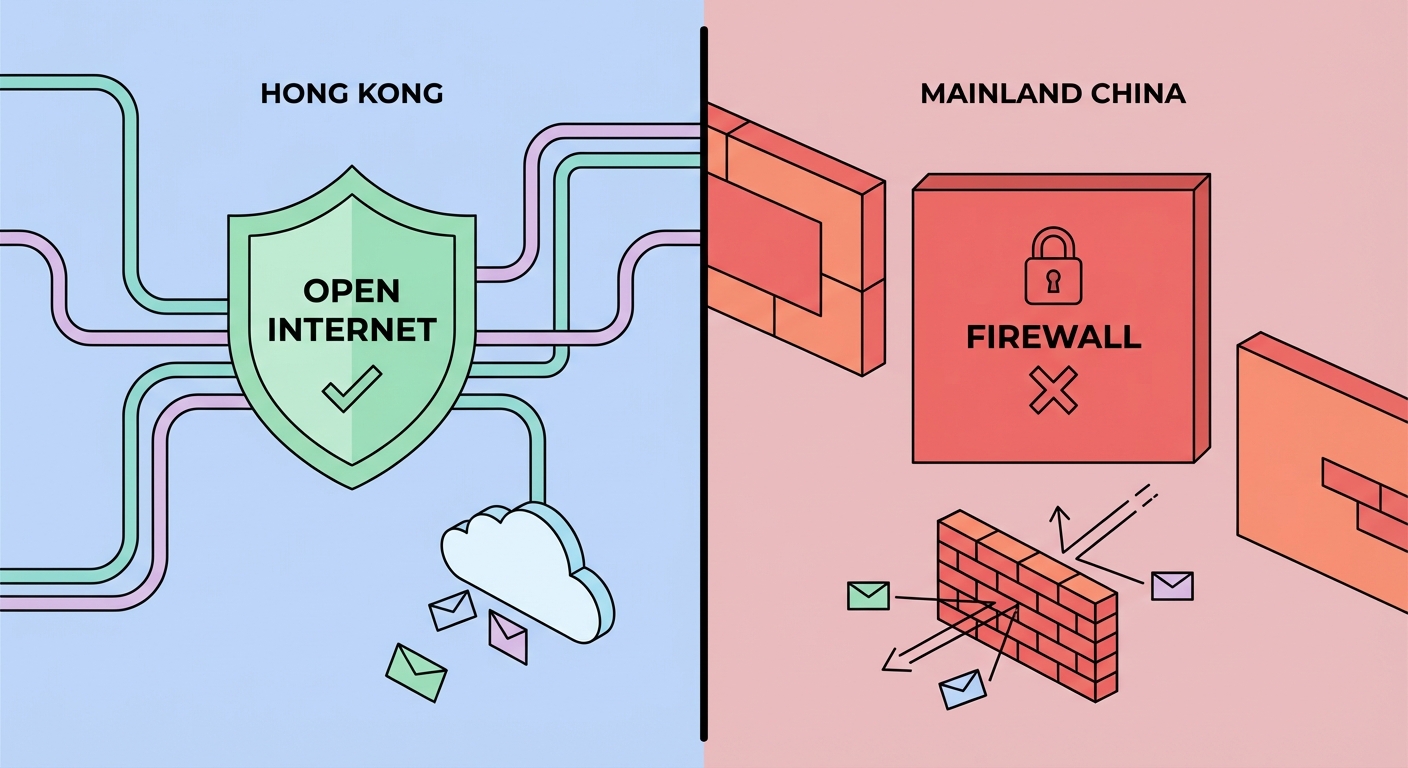
The legal and regulatory environment for VPNs in Hong Kong differs fundamentally from mainland China. In the People's Republic of China, the use of VPNs without government approval is illegal for individuals. The Cyberspace Administration of China (CAC) regulates all VPN services, requiring operators to obtain government licences and comply with data access requirements. Individuals using unapproved VPNs have been subject to fines and, in some cases, more serious penalties. The Great Firewall actively blocks most commercial VPN services.
Hong Kong maintains a separate internet infrastructure and legal jurisdiction under "One Country, Two Systems." The Great Firewall — China's national internet filtering and surveillance system — does not extend into Hong Kong's network infrastructure. Hong Kong's internet is connected to the global internet through its own network infrastructure, separate from China's filtered network. Users in Hong Kong access the same unrestricted global internet as users in Europe, Australia, or the US — no VPN is required merely to access Google, Facebook, YouTube, or other services blocked in China.
This distinction creates an important practical scenario for HK residents: when physically in Hong Kong, VPN use is legal and unrestricted. When physically crossing into mainland China — through Lo Wu, Lok Ma Chau, or Hung Hom border crossings — you enter Chinese jurisdiction where the legal framework changes. In China, individual use of unlicensed VPNs is technically illegal, though enforcement against foreign visitors and Hong Kong residents has historically been inconsistent rather than systematic. The practical advice is to install and configure a VPN in Hong Kong before entering mainland China, and to use a provider with proven obfuscation that maintains connectivity despite the Great Firewall's active blocking.
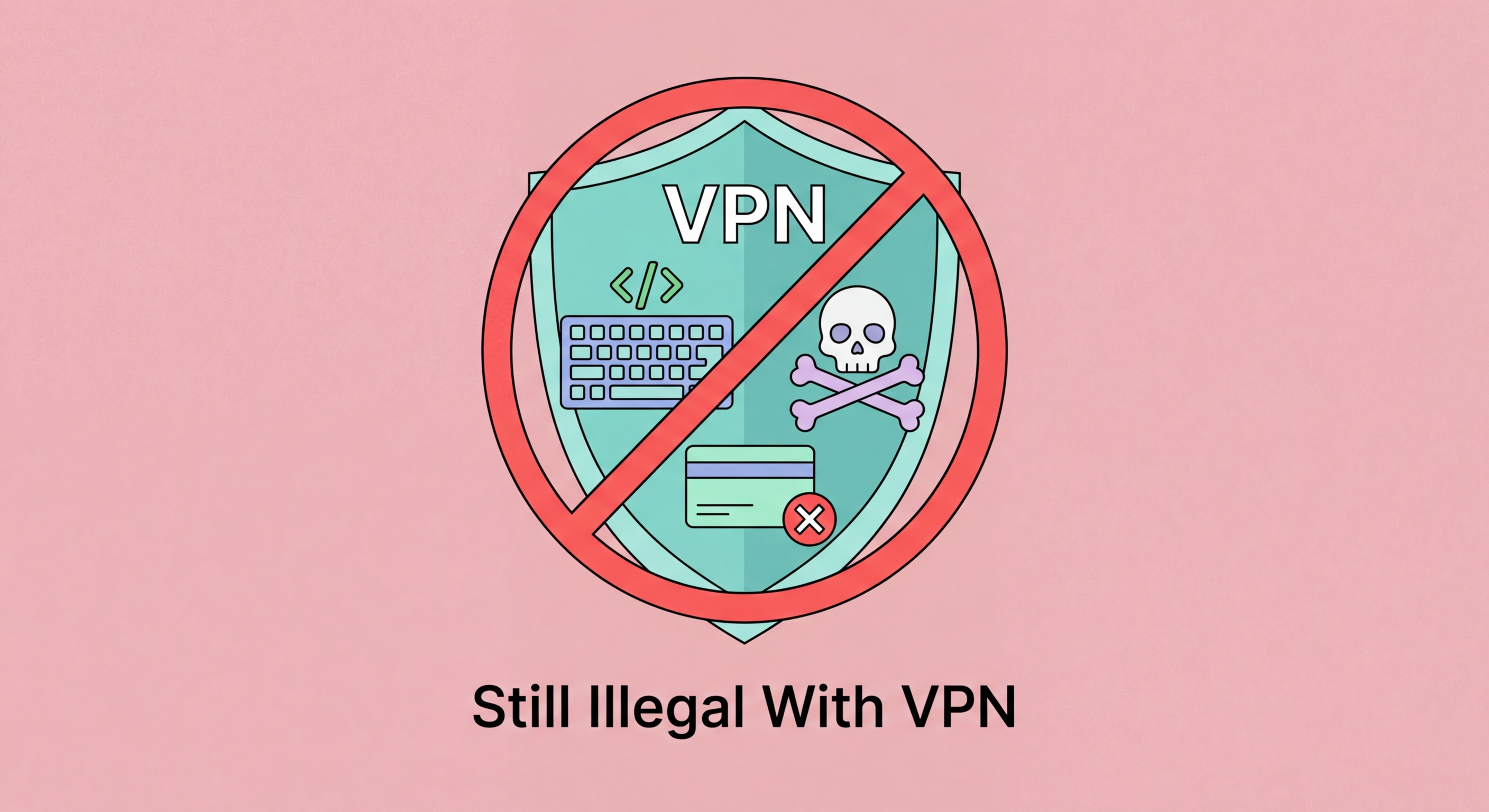
A VPN provides privacy protection for lawful activities — it is not a legal shield for illegal conduct. The Hong Kong legal system's reach extends to residents' online activities regardless of what technical measures are used to obscure them. A VPN changes where your traffic appears to originate and encrypts it from network-level surveillance, but it doesn't change the legal character of the underlying activity.
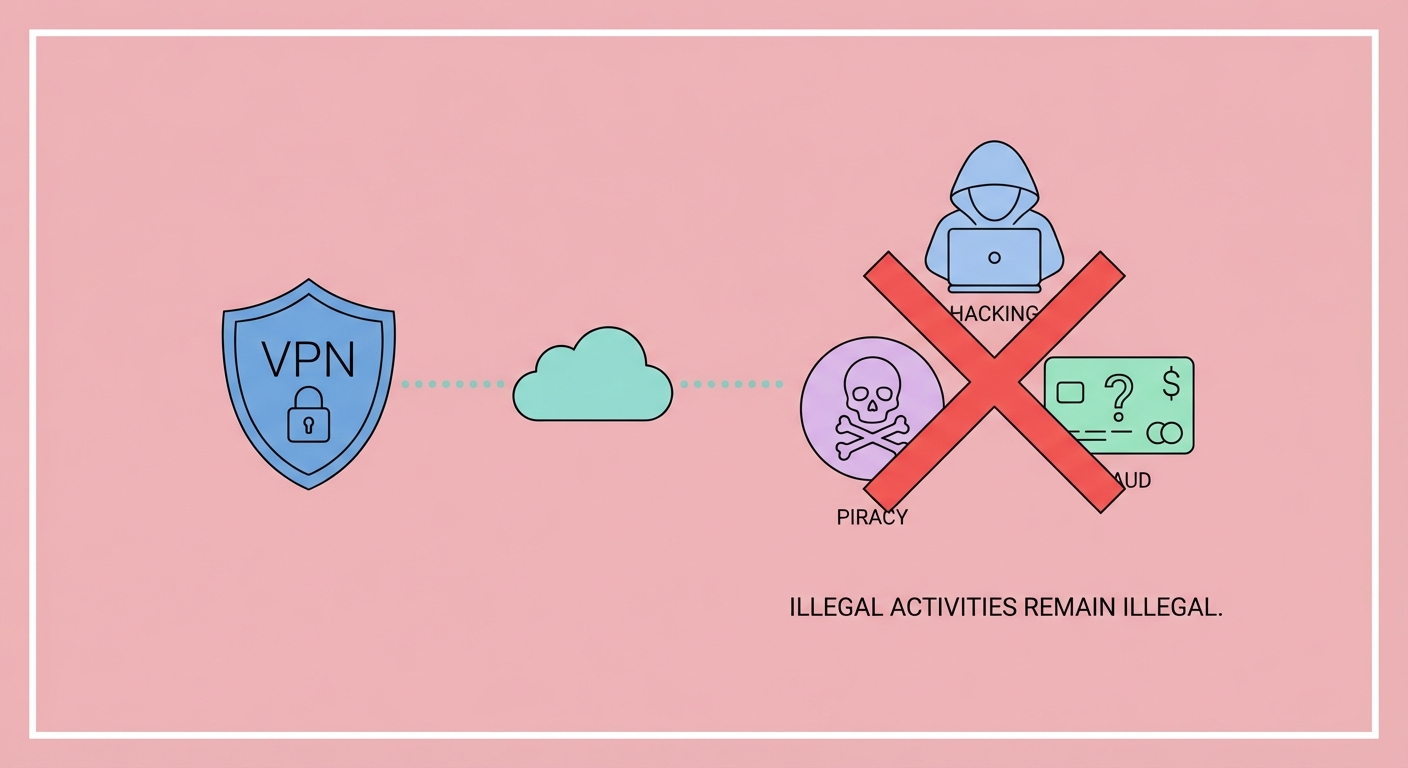
Activities that remain illegal in Hong Kong regardless of VPN use include: accessing child sexual abuse material (a serious criminal offence under Cap. 579 and Cap. 390); copyright infringement at a commercial scale (criminal provisions in the Copyright Ordinance Cap. 528 apply where financial gain is involved); fraud, money laundering, and financial crimes conducted online; distribution of computer malware and conducting cyberattacks; and activities constituting offences under the National Security Law such as planning, conspiracy, or coordination of activities meeting the NSL's definitions of separatism, subversion, or terrorism.
A VPN also doesn't prevent law enforcement attribution in determined, high-resource investigations. Traffic analysis, timing correlations, payment records, device seizure, operational mistakes, and international law enforcement cooperation (particularly with major tech companies who hold account data) can all be used to identify individuals despite VPN use. The lesson is straightforward: a VPN protects your privacy for lawful activities, but should never be considered a reliable shield for criminal conduct. The protections it offers are meaningful for privacy, not for evading accountability for serious crimes.
For the vast majority of Hong Kong VPN users — people using VPNs for streaming, remote work, public WiFi security, and general privacy protection — there is no meaningful legal risk under current Hong Kong law. VPN use for these purposes is not only legal but actively recommended by cybersecurity professionals and many corporate IT policies. The legal concern for everyday users is the same as it has always been: don't use any technology to engage in clearly illegal activities.
For journalists, researchers, activists, and others who may have heightened privacy needs, the choice of VPN provider's jurisdiction matters. A VPN provider in Panama, the British Virgin Islands, or Switzerland operates under different legal compulsion frameworks than one headquartered in the US or UK. In the context of potential legal demands, offshore providers with verified no-logs policies and RAM-only infrastructure provide stronger practical protections. The combination of a strong privacy VPN and operational security awareness (secure communications, compartmentalised accounts, careful handling of sensitive information) provides meaningful protection for those with elevated threat models.
For businesses operating in Hong Kong, VPN use is entirely standard and legally unproblematic. Corporate VPNs for remote access, site-to-site VPNs connecting offices, and employee use of consumer VPNs for privacy are all lawful and commonly used. Hong Kong's Personal Data (Privacy) Ordinance creates affirmative obligations around data protection that VPN usage helps businesses fulfil — encrypting data transmissions is consistent with PDPO's data security requirements (Data Protection Principle 4). Businesses should document their VPN usage policy and data protection rationale as part of their PDPO compliance programme.