Many services claim to "remove your data from the dark web." Understanding what is and isn't possible — and what data removal services can actually do for Hong Kong residents — prevents wasted money and false security.
The direct answer is: no, you cannot remove your personal data from the to Check If Your Data Is on the Dark Web">dark web. Once data has been posted on a Data Breach? From Hack to Dark Web">dark web marketplace, forum, or paste site, it is outside your control and outside any legal mechanism for removal. Unlike the surface web, where content removal requests can be submitted to search engines (via Google's right-to-be-forgotten process in the EU), or to website owners under various legal frameworks, dark web sites are operated anonymously with no accountability to any legal jurisdiction's content removal requirements. The operators of dark web markets are actively hostile to identification; submitting a removal request is not possible, and even if it were, the data has almost certainly already been downloaded by buyers and replicated across multiple platforms.
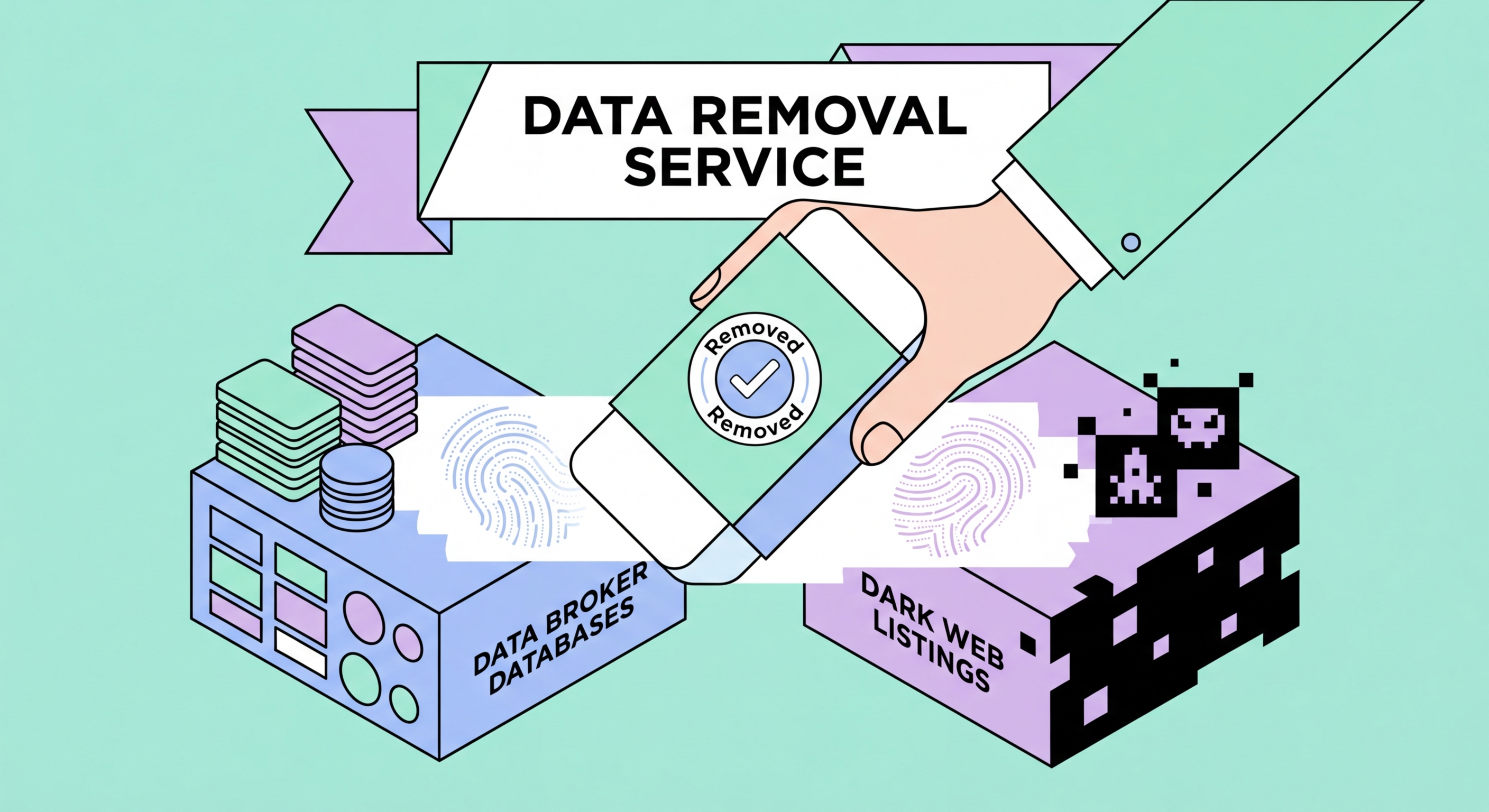
Any service that claims it can "remove your data from the dark web" is either misrepresenting what it does or is using highly qualified language that, on examination, means something much narrower than it sounds. Legitimate services in this space — like DeleteMe, Incogni, or Kanary — focus on removing your personal data from data broker websites (publicly accessible surface web databases that aggregate personal information for legitimate commercial purposes). These data broker removal services provide real, measurable value: they submit opt-out and removal requests to hundreds of data brokers (Spokeo, Whitepages, BeenVerified, and similar services), reducing your public surface web footprint. But this is a completely different service from dark web data removal — they are working on legally regulated surface web platforms, not anonymous dark web forums.
When companies market "dark web removal" or "dark web protection," they typically mean one of several things: monitoring for dark web exposure (detecting when your data appears, not removing it); fraud resolution assistance (helping you respond to identity theft enabled by dark web data); or surface web data broker removal (as described above). The monitoring and response value is real and significant; the data removal claim is marketing language that doesn't reflect a technical capability. Understanding this distinction is important for evaluating services: a service that offers continuous monitoring plus response assistance provides genuine ongoing value; a service that charges a premium specifically for "removing your dark web data" is likely charging for something that doesn't exist as described.
Data broker removal services address a legitimate and significant privacy problem: the aggregation and public sale of personal data by commercial data brokers. In the US (where the data broker industry is most developed), hundreds of companies — Whitepages, Spokeo, BeenVerified, Intelius, and many others — aggregate publicly available records (voter registration, property records, court records, social media profiles) and make them searchable for anyone willing to pay. These databases are used for background checks, people searches, and marketing — but they also provide a rich source of personal information for social engineers, stalkers, and criminals constructing targeted phishing attacks. Services like DeleteMe (US$129/year), Incogni (US$77/year), and Kanary submit removal requests to these data brokers on your behalf, reducing your surface web footprint.
For Hong Kong residents, the relevance of US-focused data broker removal services is limited. The major US data brokers primarily aggregate US public records (US addresses, US voter registration, US court records) — they have limited data on individuals whose primary history is in Hong Kong. However, HK residents who have lived in Western countries, or who have significant business or social media presence internationally, may have meaningful profiles on US data brokers. For these individuals, deletion services provide value. Within Hong Kong itself, the PDPO's data access and correction rights (DPP 6) provide a parallel mechanism: you can submit Data Access Requests to any organisation holding your personal data and, where data is inaccurate or being used without consent, request correction or deletion. The PCPD website provides template letters for exercising these rights.
A more relevant surface web concern for HK residents is data aggregation on Chinese-language platforms and regional databases. Personal data scraped from social media (Facebook, Instagram, LinkedIn, Weibo) is traded and aggregated on regional data markets that are less regulated than their US equivalents and harder to address through automated removal services. The practical approach for HK residents is to audit and tighten social media privacy settings — ensuring profile visibility is limited to connections rather than public, removing public personal details (phone numbers, email addresses, birthdate, employer details) from social profiles, and deleting old, inactive accounts. Social media privacy audits are a form of voluntary data reduction that reduces your publicly accessible personal data profile without requiring third-party removal services.
While you cannot remove your data from the dark web, there is meaningful action you can take to limit the damage from existing exposure. The most important is reducing the exploitability of the exposed data. If your email and password are on the dark web, changing that password immediately makes the exposed credential useless for account takeover — the data still exists on the market, but it no longer provides criminal access to your account. Enabling 2FA on the affected account means that even if a criminal purchases your old credentials before you've changed the password, they still cannot access your account without the second factor. This "rendering data useless" approach is the correct mental model for dealing with dark web exposure: you can't remove the data, but you can ensure it no longer unlocks anything.
For financial data exposure (credit card numbers, bank account details), the same principle applies. Cancelling the exposed card and getting a new number with a different card number, expiry date, and CVV makes the dark web listing obsolete — criminals who paid for that specific card data now have useless information. For bank account numbers (the sort code and account number for your HK bank), the equivalent action is to consider requesting a new account number if your bank offers this — less commonly done but available in cases of demonstrated fraud risk. Your HKID number cannot be changed, which is why HKID exposure is the most concerning long-term identity risk: even after taking all other remediation steps, criminals still have a valid HKID number that can be used in identity fraud attempts indefinitely.
Long-term damage limitation for HKID exposure involves shifting the burden from the data itself to the verification systems that rely on it. Financial institutions, government agencies, and other organisations that use HKID as a primary identifier can be alerted to the fact that your HKID has been exposed in a breach — many institutions will then apply enhanced verification requirements for account changes and new applications associated with your HKID. Adding fraud alerts to your TransUnion credit file (which prompts lenders to apply additional verification for credit applications in your name) and maintaining active monitoring for misuse are the practical ongoing responses. This doesn't make the HKID "safe" in the sense of removing it from criminal markets, but it hardens the systems that criminals would need to exploit to convert HKID knowledge into actual fraud.
When evaluating any service marketed as "dark web protection," "identity protection," or "data removal," apply a consistent evaluation framework. First, ask specifically what they monitor: a legitimate service will enumerate the specific data types (email addresses, phone numbers, HKID numbers, financial account numbers) and the specific sources monitored (breach databases, dark web markets, paste sites). If the answer is vague or focuses on generic "dark web monitoring" language without specifics, that's a red flag. Second, ask what they alert you about: you want alerts for specific data types appearing in specific sources, with enough detail to take action (which breach, what data was in it, what you should do). Third, ask what they do when an alert fires — legitimate services provide specific guidance, and premium tiers offer resolution assistance.
Services with the strongest reputations for dark web monitoring (as of 2025) that are accessible to Hong Kong residents include: Norton 360 with LifeLock (US$100-170/year, covers email, SSN/tax ID for US-based accounts; limited HK-specific coverage but strong breach database); Experian IdentityWorks (available internationally; strong credit monitoring component for US credit files); and the identity protection features included in comprehensive cybersecurity suites from Bitdefender and Kaspersky. For HK residents, the primary gap in all major services is coverage of HKID numbers and HK phone numbers — these are not systematically monitored by US-focused identity protection services. Premium services should be supplemented with HIBP free monitoring for email addresses, which provides excellent coverage at no cost.
Be alert to predatory services that exploit fear of dark web exposure. After a major breach affecting a service you use, you may receive targeted marketing from services offering to "remove your data" or "protect you from dark web exposure" — sometimes using the breach itself as a marketing trigger. Evaluate these services on their actual features, not their marketing language. Look for independent reviews from reputable security publications (PCMag, WIRED, TechRadar) rather than relying on company marketing materials. Understand what you're paying for before committing: a service that primarily provides credit monitoring and identity theft resolution assistance (legitimate, valuable) is different from one that primarily provides dark web monitoring (useful if coverage is adequate) or one that primarily promises data removal (not technically achievable).