What to Do After a Financial Data Breach
A step-by-step response guide for Hong Kong residents when their banking credentials, card details, or personal financial data is compromised in a breach.
Published: March 29, 2026
A step-by-step response guide for Hong Kong residents when their banking credentials, card details, or personal financial data is compromised in a breach.
Published: March 29, 2026
Financial data breaches require immediate, systematic action. Whether you have received notification that a bank ↗, merchant, or financial service has been breached — or whether you have discovered evidence of unauthorised access to your own accounts — the first 24 hours are the most critical window for limiting damage and preserving options for recovery. Panic and paralysis are the breach victim's greatest enemies; a clear, sequential response procedure is your most valuable asset in this situation.
If you have received a breach notification from a financial institution, read it carefully to understand exactly what data was exposed. Breach notifications must under PDPO ↗ guidelines inform you of the specific categories of data affected. If the breached data includes your account numbers, card numbers, online banking credentials, or identity documents, treat this as requiring immediate action. If only lower-risk data such as your email address or non-financial profile information was exposed, the urgency is lower, but monitoring for phishing attempts targeting you with the breached data remains important.
Change compromised passwords immediately. If your banking credentials were potentially exposed, change your banking password right away, even before investigating the scope of the breach. If the breach was at a merchant and you used the same email/password combination for your banking accounts (as many people do, despite best practice advice to the contrary), change your banking password immediately. Check other financial accounts for any unauthorised activity in the recent period and enable or review your transaction notification settings to ensure you will receive real-time alerts for any subsequent fraudulent activity.

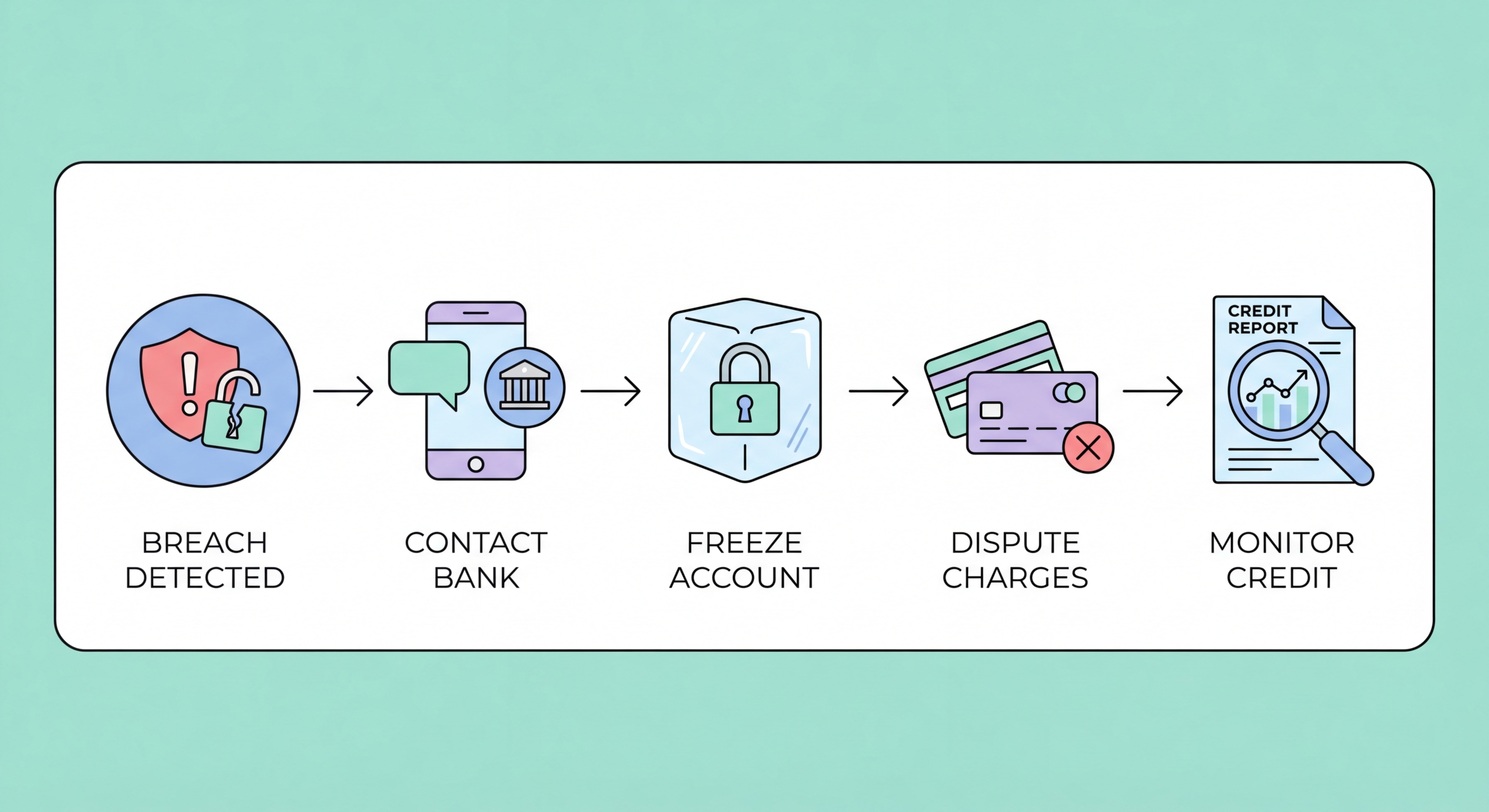
Account freezing — temporarily restricting all transactions — is the most powerful immediate tool for preventing further losses after a serious financial data breach. Most Hong Kong bank ↗s offer the ability to freeze your account through their mobile apps (typically under Settings > Security or a dedicated "Emergency" button), through telephone banking, or at any branch. A frozen account cannot process outgoing transactions, preventing fraudsters from completing transfers even if they have full access to your credentials.
When to freeze versus simply monitoring is a judgment call based on the severity of the breach. If your online banking username, password, and any 2FA information may have been compromised simultaneously — the scenario in a serious phishing attack — freezing immediately is appropriate. If only card numbers (without CVV) were exposed in a merchant breach, requesting card replacement rather than a full account freeze may be sufficient. Your bank's fraud team can advise on the appropriate level of response for the specific data exposed.
Card replacement is a more targeted action than full account freeze. When card numbers (with expiry and CVV) are exposed in a data breach, requesting new cards — which invalidates the old card numbers — is standard practice. Most Hong Kong banks issue replacement cards within 3 to 5 business days, with some offering branch collection for urgent cases. Remember to update all legitimate recurring merchants and automatic payments with the new card number after replacement — missed updates to subscriptions and standing charges can result in payment failures and service interruptions.

Reporting financial data breaches to the appropriate authorities serves multiple purposes: it creates an official record supporting any subsequent claims, enables regulatory intervention if the breached organisation has violated PDPO ↗ obligations, and contributes intelligence to ongoing investigations. Hong Kong has a relatively clear regulatory framework for financial data breach reporting, with several relevant authorities depending on the type of data and the nature of the breach.
The Office of the Privacy Commissioner for Personal Data (PCPD) is the primary regulator for personal data breaches in Hong Kong. Under the PDPO, data users (organisations holding personal data) have obligations regarding data security — though mandatory breach notification to the PCPD and affected individuals was strengthened through the 2021 PDPO amendments. As an affected individual, you can file a complaint with the PCPD if you believe an organisation has failed to take adequate steps to prevent a breach or has not informed you appropriately. The PCPD has investigative powers and can issue enforcement notices.
For breaches involving banks or licensed financial institutions, the HKMA is the relevant regulatory body. The HKMA requires licensed banks to report material incidents and has supervisory authority to investigate institutional security failures. If your bank was breached and you believe the institution's security measures were inadequate, filing a complaint with the HKMA adds regulatory pressure to your bank's handling of the situation. For breaches involving unauthorised access to your accounts resulting in financial loss, the HKPF CSTCB at 2527 7177 handles criminal investigations.

The consequences of a financial data breach can extend well beyond the immediate incident. Stolen identity information — particularly HKID numbers, passport details, dates of birth, and financial account credentials — can be held by fraudsters for months or years before being used, making ongoing vigilance necessary long after the initial response. Understanding what was exposed and establishing appropriate monitoring for that specific data type is the foundation of the long-term response.
Credit monitoring is essential after any breach involving personal identity information. TransUnion provides credit reports to Hong Kong residents and offers credit monitoring services. Requesting a credit report immediately after a significant breach establishes a baseline; repeat checks at 3 and 6-month intervals can reveal whether identity fraud attempts are being made in your name. Signs of identity fraud on a credit report include credit applications or new credit accounts you did not initiate, addresses associated with your credit file that you do not recognise, or enquiries from financial institutions you have not approached.
Phishing vigilance must be maintained for months after a breach. Fraudsters who obtain your email address, name, and partial financial details from a breach will craft targeted spear-phishing messages that reference the breached service or use your personal details to establish false credibility. Be more sceptical than usual of any financial communications for several months following a breach involving your email address or personal details. The knowledge that your data has been exposed should be treated as a standing elevation of your threat level rather than a resolved incident with a defined endpoint.
