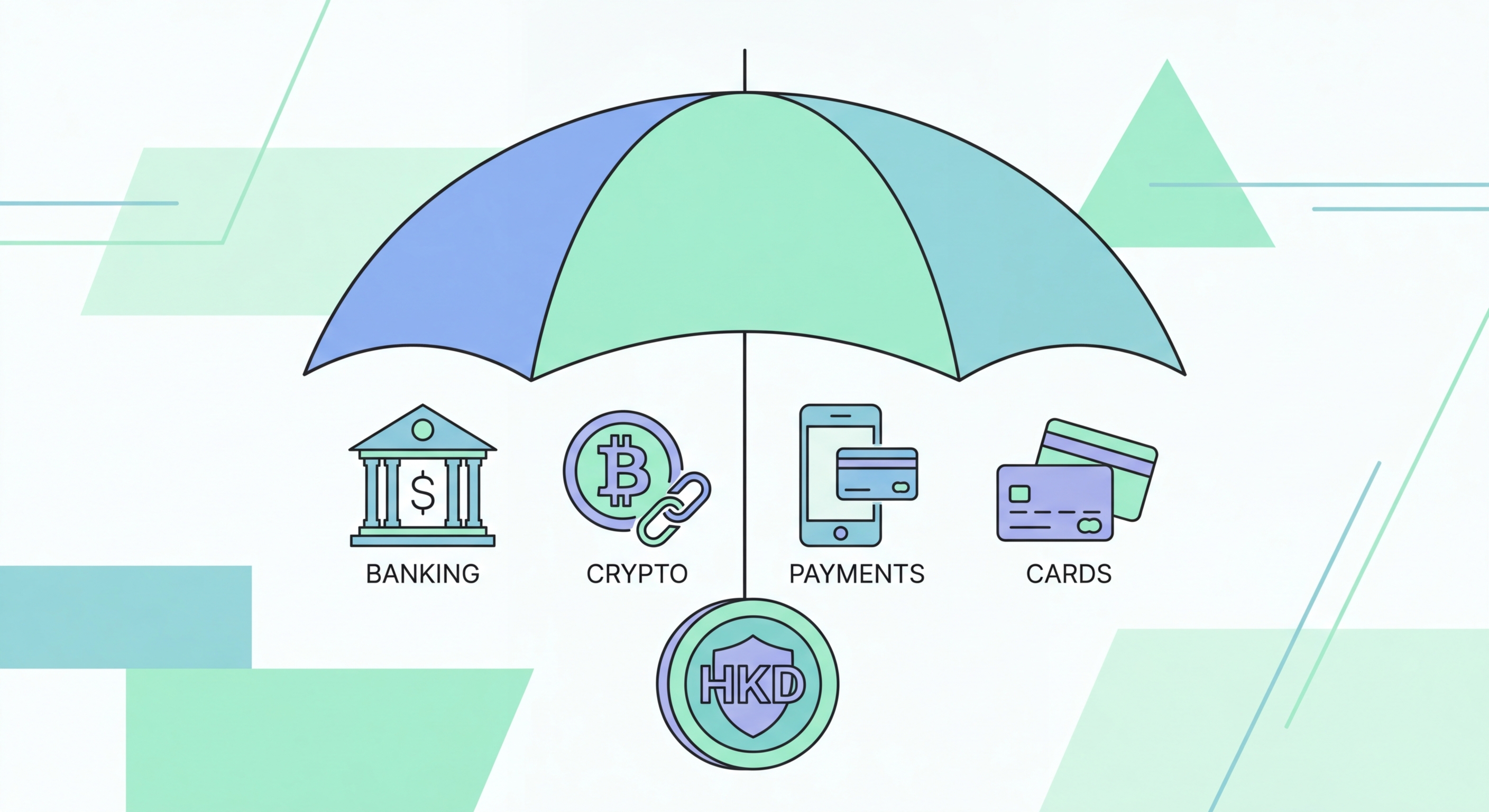
Complete Financial Cybersecurity Guide for Hong Kong Residents

The definitive, comprehensive guide to protecting every aspect of your finances in Hong Kong — from everyday banking and digital payments to cryptocurrency and sophisticated fraud schemes.

Complete financial cybersecurity guide Hong Kong
1Banking Security Foundation

Building Your Banking Security Foundation

Financial security in Hong Kong starts with your banking relationships — the accounts, cards, and digital services that form the foundation of your financial life. Hong Kong's banking sector, regulated by the HKMA, is among the world's most sophisticated, but no institutional safeguard replaces personal security practices. The three pillars of banking security — strong authentication, safe access habits, and active monitoring — apply equally to HSBC and Hang Seng customers, virtual bank users, and everyone in between.

Authentication is the gateway. Every banking account should have a unique, complex password generated by a password manager — never reused from any other service. Two-factor authentication should be the strongest available form offered by your bank: in-app mobile tokens or push notification approval are substantially stronger than SMS OTP, which is vulnerable to SIM swapping. Where your bank offers device registration and trust relationships, register only the devices you actively use and review registered devices periodically to ensure no unfamiliar devices have been added. Biometric authentication on mobile banking apps adds convenience without meaningful security sacrifice when the underlying device is properly secured.

Access habits determine your exposure. Banking should only occur on devices you personally control, on networks you trust (home WiFi or mobile data — never public WiFi without a VPN), via your bank's official app downloaded from an authorised app store or the bank's official website accessed via a trusted bookmark. Session management matters — log out fully after each banking session rather than simply closing the app. Enable all available account activity notifications and review transaction history regularly. Annual review of security settings, registered devices, and nominated contacts ensures your security configuration remains current as banks add new protective features.

  • Unique passwords via password manager: Generate and store unique, complex passwords for every banking service — never reuse passwords from other services
  • Strongest available 2FA: Upgrade to your bank's in-app authenticator token or push notification approval — avoid SMS OTP for primary banking authentication
  • Device management: Review registered devices on all banking accounts quarterly and remove any you no longer use or don't recognise
  • Official channel discipline: Access banking only through official apps or bookmarked official URLs — never via links in emails, SMS, or search results
  • Transaction notification coverage: Enable real-time push notifications for every transaction on every bank account and card at the minimum possible threshold
  • Annual security audit: Review all banking security settings annually — banks regularly add stronger protective options that existing customers may not receive automatically
Banking security foundation
2Complete Payment Security Strategy

A Complete Strategy for Secure Payments Across Every Method

Hong Kong residents interact with more payment methods than almost any population in the world — physical cash, Octopus, credit and debit cards, FPS, PayMe, Alipay HK, WeChat Pay HK, Apple Pay, Google Pay, cross-border WeChat Pay, and cryptocurrency. Each method has a distinct security profile. Building a coherent security strategy across all methods requires understanding the protection hierarchy: credit cards offer the strongest fraud protection through chargeback rights; tokenised digital wallets (Apple Pay, Google Pay) protect card details at the point of sale; FPS and peer-to-peer transfers require the strongest pre-transfer verification because recovery is hardest.

The practical payment security strategy for HK residents: use credit cards (with 3DS enrolled) for significant online purchases from established merchants, digital wallet tokenisation for in-person NFC payments, FPS only with carefully verified recipients, and direct bank transfers only for established, known payees. Maintain transaction notification coverage across all payment methods — a fraudulent transaction detected in seconds can still be caught before damage compounds. Set spending limits on all accounts and cards to the minimum adequate for legitimate use.

Card-not-present fraud — online purchases using stolen card details — is the most prevalent financial fraud affecting Hong Kong cardholders in 2026. Mitigating this requires limiting the number of merchants who store your real card details (use virtual cards, digital wallet tokens, or PayPal as intermediaries), enabling 3D Secure for all purchases, and monitoring statements at least weekly. The combination of transaction alerts plus weekly statement review plus annual card detail audit (checking which merchants have stored payment information) forms a comprehensive card fraud prevention system accessible to anyone.

  • Payment method hierarchy by protection: Credit card > Digital wallet token > PayPal > Debit card > FPS > Bank transfer — use higher-protection methods for unfamiliar merchants
  • 3D Secure enrollment: Verify all cards are enrolled in 3DS — call your issuer if you're unsure; this adds a critical authentication layer for online purchases
  • Virtual cards for online merchants: Use virtual card numbers or Apple/Google Pay tokenisation to prevent real card details being stored in merchant systems
  • FPS verification discipline: Always verify payee name confirmation before any FPS transfer and independently verify new payees before first transfers
  • Weekly statement review: Review all accounts weekly rather than monthly — catching fraud early dramatically improves recovery outcomes
  • Annual stored card audit: Review which merchants have your payment details stored — remove authorisation from any you no longer use
Complete payment security strategy
3Fraud Recognition and Avoidance

Recognising and Avoiding Every Major Fraud Type

Hong Kong's fraud landscape encompasses dozens of distinct typologies, but they share a common set of psychological manipulation techniques. Understanding these techniques — rather than memorising every specific fraud variant — provides durable protection against novel schemes not yet widely publicised. The core manipulation arsenal is: artificial urgency (you must act now or face severe consequences), fear (of arrest, account suspension, financial penalty), authority (police, IRD, bank officials are calling), greed (you have won a prize, an investment opportunity will make you rich), and relationship exploitation (romantic or friendship connections cultivated specifically to enable financial requests).

Investment fraud — particularly pig butchering — causes the largest per-victim losses in Hong Kong. The defining characteristics: contact initiated by a stranger, a cultivated relationship that specifically introduces investment opportunities, an unlicensed platform showing spectacular returns, and barriers to withdrawal when you try to access your money. The SFC's licensing register at apps.sfc.hk is the definitive tool for verifying investment platform legitimacy — any platform not listed should be treated as fraudulent regardless of the returns shown. Consulting the Anti-Scam Helpline 18222 before committing significant funds to any investment opportunity introduced by a new contact is strongly advisable.

Identity fraud — using your personal information to open accounts, apply for credit, or commit other financial crimes in your name — is a secondary consequence of many primary fraud types. Protecting your HKID number, date of birth, address, and financial account details as carefully as your passwords is important. Regular credit bureau checks (TransUnion) provide an early warning system for identity fraud, catching fraudulent applications before they generate significant debt in your name. The combination of strong personal information hygiene, breach monitoring via haveibeenpwned.com, and periodic credit reports forms a comprehensive identity fraud detection system.

  • Manipulation technique recognition: Urgency, fear, authority, greed, and relationship exploitation are the universal tools of financial fraud — recognising them breaks the manipulation spell
  • SFC license as investment gateway: No investment platform, regardless of promised returns or relationship with the introducer, should receive your money without SFC verification
  • Anti-Scam Helpline 18222: Call before committing to any significant financial action prompted by unexpected contact — police can quickly verify legitimacy
  • Personal information hygiene: Protect HKID, date of birth, and financial details with the same discipline applied to passwords — these are the currency of identity fraud
  • TransUnion credit monitoring: Check your credit report at least annually and after any significant data breach or suspected identity fraud
  • Second opinion for large financial decisions: For any financial decision involving significant sums promoted by a new contact, seek a second opinion from a trusted advisor before committing
Financial fraud recognition guide
4Digital Asset and Crypto Security

Protecting Your Digital Assets: Crypto and DeFi Security

For Hong Kong residents holding cryptocurrency — an increasingly common asset class given the city's position as Asia's leading regulated crypto hub — the security principles governing digital asset protection differ substantially from traditional financial asset security. The irreversibility of blockchain transactions, the personal custody model for self-held wallets, the absence of regulatory protection for DeFi protocols, and the sophisticated and well-funded adversaries targeting crypto holders collectively make crypto security a specialised discipline requiring specific knowledge and practice.

The custody hierarchy for cryptocurrency maps directly to security: exchange accounts (custodial hot) are the most convenient and the least secure for long-term holdings; software wallets (non-custodial hot) give you key ownership but remain internet-connected; hardware wallets (non-custodial cold) provide the strongest security for significant holdings at modest cost. The transition cost — moving from exchange to hardware wallet — is a one-time effort that pays ongoing security dividends. For HK investors, using only SFC-licensed VATPs for exchange-based trading and a reputable hardware wallet for longer-term holdings is the appropriate two-tier strategy.

DeFi participation adds a further layer of complexity. The smart contract risk unique to DeFi — where code bugs can result in complete loss without any fraud being committed — requires technical due diligence (verified audits, established track records, liquidity depth) that most retail investors cannot perform independently. The practical consequence is limiting DeFi exposure to the most established, widely used protocols and sizing positions to reflect the true total-loss risk profile. Crypto security is ultimately about acknowledging the unique risk environment and applying proportionally thorough protective practices — the same diligence that should be applied to any significant financial exposure.

  • SFC-licensed exchanges only: Trade only on platforms licensed as VATPs by the SFC — verify at apps.sfc.hk before depositing any funds
  • Hardware wallet for significant holdings: Move any holdings beyond active trading balances to a hardware wallet — Ledger or Trezor purchased directly from the manufacturer
  • Seed phrase physical security: Store seed phrases on paper or steel, offline, in two physically separate secure locations — never digitally
  • DeFi exposure sizing: Size DeFi positions assuming 100% loss is possible — only commit funds where total loss would be financially recoverable
  • Regular approval revocation: Audit and revoke unused DeFi smart contract approvals monthly at Revoke.cash
  • Pig butchering awareness: Any online contact introducing cryptocurrency investment opportunities — romantic partner, new friend, professional contact — should be assumed to be a pig butchering scammer until definitively proven otherwise
Cryptocurrency and DeFi security

Your Complete Financial Security Starts Here

Explore every article in our Financial Protection library — 20 in-depth guides covering every aspect of financial cybersecurity for Hong Kong residents.

Related VPN Articles