ATM Safety Tips in Hong Kong: Avoid Card Skimming and Fraud
How ATM skimming operates in Hong Kong, what compromised machines look like, and the habits that protect your card details and PIN at every ATM.
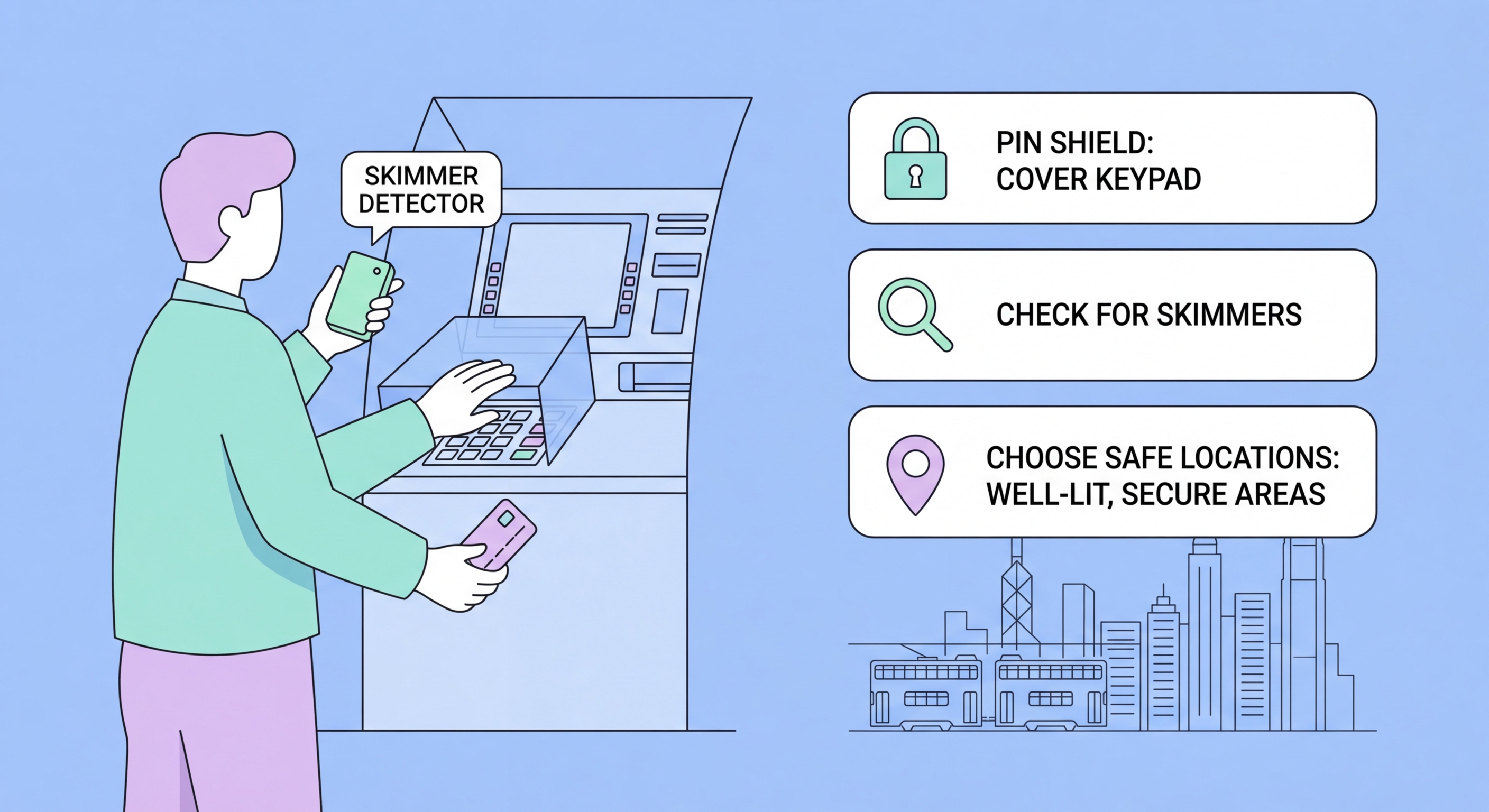
How ATM skimming operates in Hong Kong, what compromised machines look like, and the habits that protect your card details and PIN at every ATM.
ATM skimming involves installing covert hardware on cash machines to capture card data and PIN numbers from unsuspecting users. Despite the widespread adoption of chip-and-PIN technology, which makes captured magnetic stripe data less useful for domestic transactions, skimming operations persist in Hong Kong because: captured card data can be used to create counterfeit cards for use in regions still relying on magnetic stripes, card data combined with PINs can be used for cash withdrawals abroad, and some domestic transactions still fall back to magnetic stripe processing.
A complete skimming operation consists of two components. The card reader component — a thin plastic overlay placed over the genuine card insertion slot — captures the magnetic stripe data as the card is inserted. This overlay is manufactured to match the specific ATM model being targeted and is often indistinguishable from the genuine reader without close inspection. The PIN capture component is either a miniature camera hidden in a false panel above the keypad, pointing downward to record PIN entry, or a thin overlay placed on top of the genuine PIN pad that records keystroke data electronically.
Skimming attacks in Hong Kong have been reported on ATMs in high-traffic locations — shopping mall ATM clusters, airport terminals, and dense urban ATM lobbies — because volume maximises the data harvested before equipment is discovered. Bank-installed ATMs in dedicated, enclosed bank lobbies with security cameras and regular maintenance checks are less frequently targeted than standalone ATMs in retail spaces, tourist areas, and locations with lower surveillance coverage. The HKPF Cyber Security and Technology Crime Bureau regularly publishes alerts when skimming equipment is discovered.

A brief inspection before inserting your card at any ATM substantially reduces your risk of encountering undetected skimming equipment. The inspection takes less than 10 seconds and becomes automatic with practice. The fundamental premise is that genuine ATM components are firmly attached, colour-consistent, and flush with the machine surface — skimming overlays, no matter how well manufactured, often show tells that distinguish them from genuine hardware.
Start with the card reader. Grip the reader insert area and apply light wiggling pressure — genuine card readers are firmly fixed to the ATM body and should not move. Skimming overlays, being attached with double-sided tape or light adhesive, may wobble slightly when tested this way. Look for any colour mismatch between the card reader and the rest of the machine, gaps or uneven seams where an overlay meets the machine body, or any part of the machine that looks newer, different in finish, or inconsistent with the rest of the unit.
Inspect the area around the PIN pad and the surfaces above it. Look for any unusual protrusions, asymmetric panels, or items that might conceal a camera pointing at the keypad — fraudsters have concealed cameras in false light fixtures, fake literature holders, and mirror-like surfaces above ATMs. On the PIN pad itself, feel for any sponginess or thickness that suggests an overlay rather than the genuine pad — real PIN pads have solid, clearly-defined key travel. If anything about an ATM appears unusual, use a different machine and report it to the bank's security number or the HKPF.

PIN protection is the most consequential habit at any ATM. Without your PIN, captured card data from a skimmer is far less useful — the attacker has your card's magnetic stripe data but cannot perform cash withdrawals without the PIN. Covering the PIN pad with your non-dominant hand during PIN entry — creating a physical shield that blocks any concealed camera from recording the digits — is the single most impactful behavioural defence at the ATM. This takes no additional time and requires no technical knowledge, making it accessible to everyone.
ATM selection is also within your control. Bank lobby ATMs with internal security cameras, maintained regularly by bank staff, are the safest option. ATMs in HSBC, Hang Seng, BOCHK, and other major bank branches in Hong Kong are physically more secure environments than standalone ATMs in shopping mall common areas, tourist corridors in Tsim Sha Tsui or Causeway Bay, or convenience stores. When possible, use your own bank's ATMs — many major HK banks have fee-free arrangements within networks like JETCO, and using familiar machines makes spotting anomalies easier.
Being aware of your surroundings during ATM use is equally important. Shoulder surfing — someone standing close enough to observe your PIN entry or read your transaction screen — is a distinct threat from skimming. Ensure no one is positioned to observe your screen or keypad. Be aware of strangers who offer unsolicited "help" at ATMs — a common distraction tactic. Complete your transaction, take your card, and step away from the machine before reviewing your receipt or cash. Your attention should be fully on the transaction while at the machine, not on your phone or conversations.

If your ATM card data has been compromised — whether you noticed suspicious equipment, received an alert about a foreign ATM withdrawal, or spotted an unfamiliar cash withdrawal on your statement — the response is time-sensitive. The primary step is blocking your card before more withdrawals can be processed. All major Hong Kong banks offer card blocking through their mobile app (typically under Card Management), through their 24-hour telephone banking, or at any branch ATM using your card and PIN. Block the card before investigating the extent of the fraud.
Reporting the fraud to your bank initiates the dispute process. Provide the details of any unauthorised transactions — dates, amounts, ATM locations if known. Banks in Hong Kong are required to investigate fraud claims and, for transactions that meet the criteria of genuine skimming fraud, will typically reimburse losses under their zero-liability policies provided you report promptly and have not been negligent. "Negligent" in this context typically means voluntarily sharing your PIN with someone or being unaware of extremely obvious tampering — standard reasonable-care use of an ATM does not constitute negligence.
Reporting the compromised ATM to the police is important both for your case and for preventing further victims. Call 999 to report the discovery of suspected skimming equipment at an ATM location — provide the bank name, ATM location, and a description of the suspicious elements. The bank's own security team should also be notified — contact details are usually printed on the ATM. Take a photo of the suspicious equipment if safe to do so (without touching it) — this can be valuable evidence for both the bank investigation and police proceedings.
