What Is Endpoint Security? EDR vs Antivirus Explained

Endpoint security is the broader discipline of protecting all devices that connect to your network. Understanding the spectrum from basic antivirus to full EDR helps businesses in Hong Kong choose the right protection level.

Endpoint security explained
1Endpoint Security Defined

What Endpoint Security Means and Why It's Broader Than Antivirus

An endpoint is any device that connects to a network and serves as a potential entry point for threats — laptops, desktops, smartphones, tablets, servers, and increasingly IoT devices. Endpoint security is the practice of protecting all these devices from compromise. Traditional antivirus was the primary endpoint security tool for individual devices, but the evolution of the threat landscape — particularly advanced persistent threats (APTs), ransomware that moves laterally through networks, and fileless attacks that evade signature-based detection — has driven the development of more sophisticated endpoint security platforms that go far beyond simple malware scanning.

The endpoint security market now spans several capability tiers. Traditional antivirus (AV) uses signature-based and basic heuristic detection to block known malware. Next-Generation Antivirus (NGAV) adds machine learning-based detection and behavioural monitoring to catch novel threats, but still primarily focuses on prevention. Endpoint Detection and Response (EDR) adds the critical capabilities of continuous monitoring, detailed telemetry collection, threat investigation tools, and active response capabilities that allow security teams to detect, investigate, and remediate threats that bypass prevention layers. Extended Detection and Response (XDR) extends this visibility beyond the endpoint to encompass network, email, identity, and cloud telemetry in a unified platform.

The key distinction between antivirus and EDR is the philosophy: antivirus assumes prevention can be near-complete, while EDR assumes that some threats will evade prevention and focuses heavily on the ability to detect them quickly and respond effectively. EDR platforms provide persistent, detailed logs of every process execution, network connection, file access, and registry modification on protected endpoints. This telemetry enables security analysts to investigate suspicious activity, trace the chain of events from initial compromise through lateral movement to impact, and take response actions (isolating an infected device, terminating processes, deleting malicious files) directly from the management console. For organisations with security teams, this investigation and response capability is often more valuable than marginal improvements in prevention rates.

  • Endpoint Definition: Any network-connected device — laptops, phones, tablets, servers, IoT devices.
  • AV: Signature and heuristic detection — prevention-focused, limited investigation capability.
  • NGAV: Machine learning detection plus behavioural monitoring — better against novel threats.
  • EDR: Continuous telemetry, investigation tools, and active response — assumes some threats will bypass prevention.
  • XDR: Extended visibility across endpoints, network, email, cloud — unified detection and response platform.
  • Key Philosophy Shift: EDR accepts that breaches will occur and optimises for fast detection and containment.
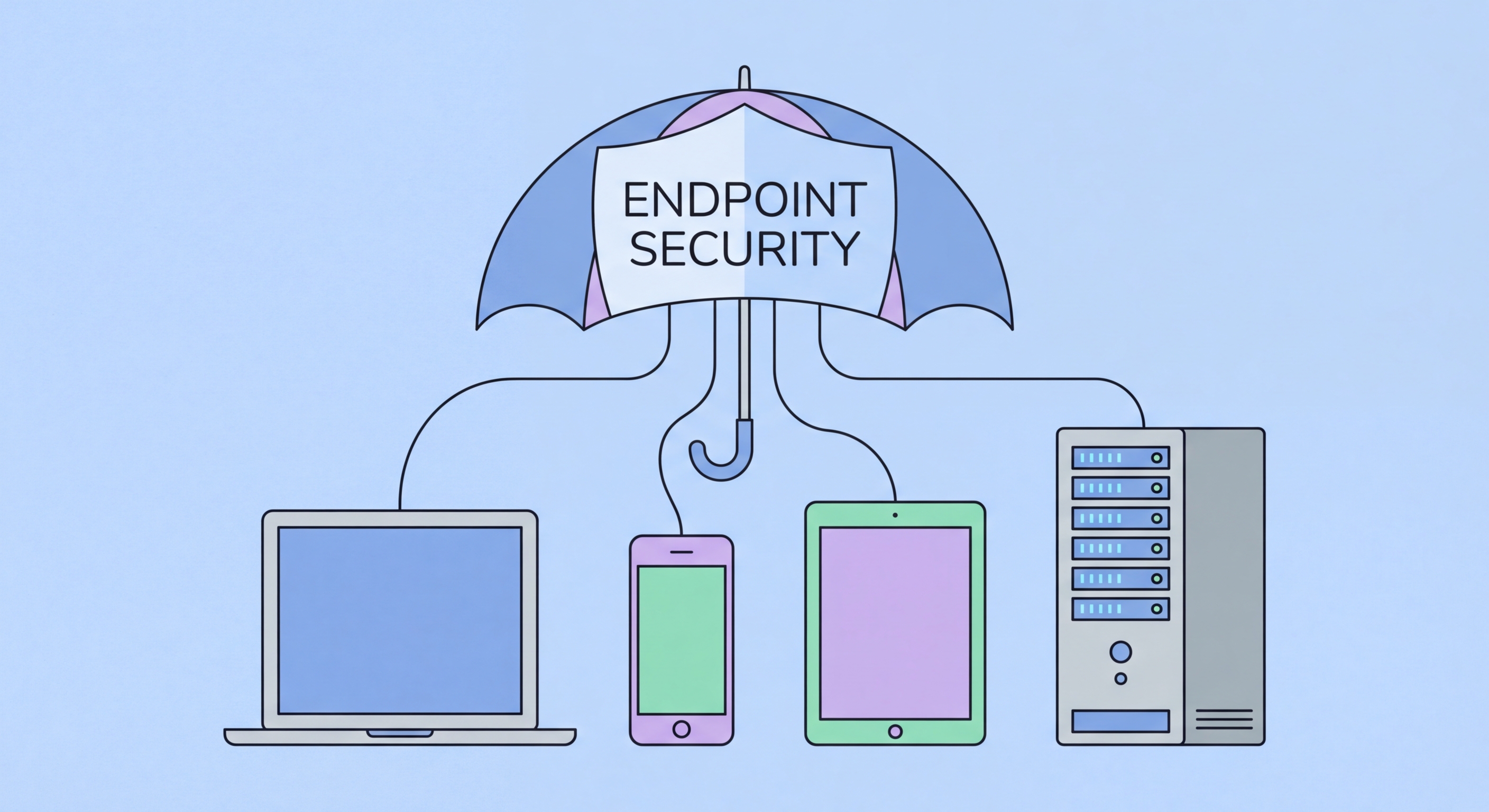
Endpoint security spectrum
2Leading EDR Platforms

Leading EDR and Endpoint Security Platforms

CrowdStrike Falcon is the market leader in enterprise EDR and has defined much of the current category. Its cloud-native architecture means that all endpoint telemetry is processed in CrowdStrike's cloud, enabling real-time threat intelligence correlation across their entire customer base. The Falcon platform spans from basic NGAV protection to full EDR, identity protection, threat intelligence, and managed detection and response (MDR) services. CrowdStrike's threat intelligence team (Counter Adversary Operations) has made major contributions to understanding nation-state threat actors — relevant intelligence given the geopolitical threat landscape affecting Hong Kong organisations. Pricing reflects the enterprise tier: typically US$15-20+ per endpoint per month for full Falcon Enterprise.

Microsoft Defender for Endpoint has matured into a strong enterprise EDR platform, particularly for organisations already using Microsoft 365. Included in Microsoft 365 E5 licensing or available as a standalone purchase, Defender for Endpoint provides enterprise-grade EDR capabilities with deep Windows integration that enables detection capabilities other vendors cannot match in pure Windows environments. The integration with Microsoft Sentinel (cloud SIEM), Microsoft Entra ID (identity), and Defender for Office 365 (email) creates a coherent XDR architecture for Microsoft-heavy organisations. For Hong for Hong Kong Online Banking: What You Need to Know">for Hong Kong Online Banking: A Complete Guide">for Hong Kong SMEs: Where to Start">for Hong Kong Businesses">Kong businesses already on Microsoft 365, evaluating whether their existing licensing includes Defender for Endpoint before purchasing separate security products is advisable — the answer is frequently yes at the Business Premium tier.

SentinelOne Singularity is the primary CrowdStrike competitor with a differentiating feature: autonomous response. Rather than requiring a human analyst to take response actions after an alert, SentinelOne's AI engine can automatically isolate infected devices, kill malicious processes, and roll back malware-induced changes in real time without waiting for human intervention. This "autonomous mode" response capability is particularly valuable for organisations with limited security staff who can't maintain 24/7 SOC coverage. SentinelOne's Storyline feature automatically builds a graphical representation of attack chains — linking related events across time to show the complete picture of an attack from initial access through to impact — significantly reducing analyst investigation time.

  • CrowdStrike Falcon: Enterprise EDR market leader — cloud-native, comprehensive threat intelligence, strong nation-state coverage.
  • Microsoft Defender for Endpoint: Included in M365 E5/Business Premium — exceptional Windows integration and XDR capabilities.
  • SentinelOne Singularity: Autonomous response AI — takes remediation actions without waiting for human analyst.
  • Palo Alto Cortex XDR: Strong XDR platform from firewall vendor — excellent network-endpoint correlation.
  • Trend Micro Vision One: Well-established regional vendor with strong APAC support — relevant for HK businesses.
  • Check M365 Licensing: Many HK businesses on M365 Business Premium have Defender for Endpoint already included.
EDR platforms compared
3Choosing the Right Tier

How to Choose the Right Endpoint Security Tier for Your Organisation

The appropriate endpoint security tier depends primarily on three factors: your threat model (who might attack you and how sophisticated are they), your internal security team capabilities, and your regulatory and compliance obligations. For a small Hong Kong professional services firm with 10–20 employees, no regulatory obligations beyond general PDPO compliance, and no dedicated security staff, business-grade antivirus with centralised management (ESET Endpoint Security, Sophos Endpoint, or Microsoft Defender for Business) likely provides appropriate protection at a manageable cost and complexity level. Moving to full EDR without the security staff to use the telemetry and respond to alerts provides expensive dashboards but limited additional protection benefit.

Organisations that should consider EDR include: any business in the financial services sector (regulated under SFC or HKMA requirements that increasingly reference cyber resilience standards), healthcare organisations handling patient data under PDPO's enhanced obligations for sensitive personal data, legal firms with high-value client confidential information, and any business that has experienced a security incident and needs better visibility to understand what happened. The HKMA's Cyber Resilience Assessment Framework (C-RAF) and the SFC's circular on cybersecurity explicitly reference endpoint monitoring capabilities as baseline expectations for licensed entities — making EDR-level capabilities effectively compliance requirements for regulated financial sector firms.

Managed Detection and Response (MDR) services offer a practical middle path for organisations that need EDR capabilities but lack the in-house security analysts to operate them. MDR providers supply the EDR platform and provide 24/7 monitoring, alert triage, investigation, and incident response by their security operations team. CrowdStrike Complete, SentinelOne Vigilance, and Sophos MDR are well-known MDR services. For Hong Kong businesses, local and regional MDR providers including Cybereason, Trend Micro Managed XDR, and local HK MSPs with security operations practices offer alternatives. MDR pricing typically ranges from US$10–30 per endpoint per month depending on platform and service scope — often less expensive than building equivalent internal capability for organisations under 200 employees.

  • Small Business (10–50 employees): Business-grade AV with central management — ESET Endpoint, Sophos, or M365 Defender.
  • Regulated Entities: HKMA/SFC compliance expectations reference endpoint monitoring — EDR increasingly required.
  • Healthcare/Legal: High-sensitivity data warrants EDR for investigation capability if a breach occurs.
  • MDR Option: 24/7 managed service with EDR platform — practical for organisations without in-house security analysts.
  • M365 Check: Verify your Microsoft 365 licensing tier — Business Premium includes Defender for Endpoint.
  • Regional Vendors: Trend Micro, Check Point (both with HK presence) offer strong APAC support for regional businesses.
Choosing endpoint security tier
4Deployment Considerations

Deploying Endpoint Security: Key Considerations for Hong Kong Businesses

Successful endpoint security deployment requires more than purchasing a product. Coverage is the first consideration: the endpoint security solution must be deployed on every device that connects to the corporate network or accesses corporate data — including employee personal devices used for work if a BYOD policy exists. A single unprotected endpoint is potentially the weakest link through which an attacker gains initial access. For remote working arrangements — normalised during COVID and retained by many Hong Kong businesses — ensuring that home-based employees' devices are covered by corporate endpoint security requires mobile device management (MDM) integration or other mechanisms to verify and maintain agent deployment.

Endpoint security policies must be configured and maintained, not just deployed. Default configurations are often tuned conservatively to minimise false positives and support calls, which means protection isn't as aggressive as it could be. Critical settings to review include: whether real-time protection is enforced and cannot be disabled by users, whether web protection covers all browsers, whether exclusions have been properly scoped (broad exclusions to reduce performance impact are a common security misconfiguration — they effectively disable protection for specified paths), and whether automatic definition updates are configured. Endpoint security products with centralised management consoles allow IT administrators to enforce policies remotely and see compliance status across the device fleet.

Endpoint security is one component of a broader security architecture, not a complete solution. Defence in depth — layering multiple security controls so that failure of any single control doesn't result in complete compromise — applies to endpoint security in combination with network security (firewalls, intrusion detection), identity security (MFA, privileged access management), email security (phishing filter, attachment scanning), and security awareness training. For Hong Kong businesses building or maturing their security program, a useful framework is the CIS Controls — a prioritised set of security actions widely adopted by organisations globally. The top six CIS Controls (hardware inventory, software inventory, data protection, secure configuration, account management, access control management) address the most common root causes of security incidents and provide a structured starting point regardless of company size.

  • Complete Coverage: Every device accessing corporate data must have the endpoint agent — BYOD included.
  • Policy Configuration: Default settings are often conservative — review and tighten exclusions and protection levels.
  • Policy Enforcement: Central management must prevent users from disabling protection — a common gap.
  • Defence in Depth: Endpoint security layers with email, network, identity, and awareness training.
  • CIS Controls: Internationally recognised security framework — practical starting point for HK SME security programs.
  • MDM Integration: Mobile device management required to enforce endpoint security on smartphones and tablets.
Enterprise antivirus guide for Hong Kong →
Endpoint security deployment

Build the Right Endpoint Protection for Your Business

Explore our enterprise antivirus guide and find the right endpoint security tier for your Hong Kong business size, industry, and risk profile.

Related VPN Articles