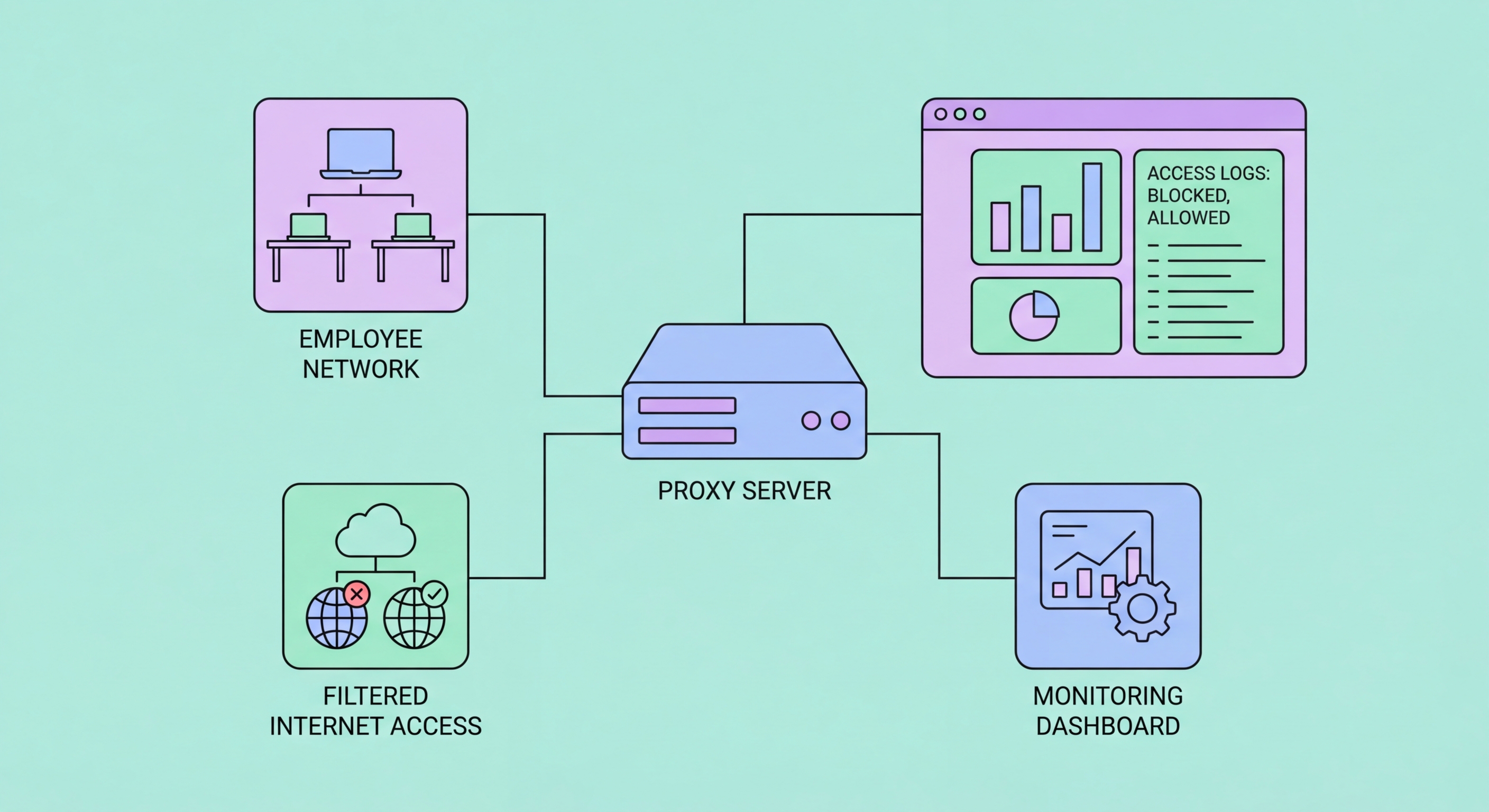
Hong Kong's position as Asia's leading business hub creates unique and diverse proxy use cases. From competitive intelligence to corporate security, proxies are mission-critical infrastructure for many HK organisations.
Market intelligence and competitive data collection represent the largest driver of commercial proxy demand from Hong Kong businesses. E-commerce companies operating in pan-Asian markets need to monitor competitor pricing across dozens of platforms — from Taobao and JD.com to Lazada, Shopee, and Amazon Japan — simultaneously and continuously. Manual price checking is impossibly slow at the scale required; automated data collection using proxy infrastructure is the standard industry approach. The proxies ensure these collection operations aren't blocked by target platforms' anti-bot systems.
Financial services firms — banks, hedge funds, trading houses, and fintech companies — use proxy infrastructure extensively for market data aggregation. Real-time collection of pricing data from alternative data sources, news sentiment analysis from regional publishers across multiple countries, regulatory filing monitoring from multiple jurisdictions, and competitive product monitoring all require the ability to make high-volume requests to external sources without revealing the firm's identity or triggering rate limits. In the highly competitive environment of Hong Kong financial services, the firm with more comprehensive and faster market data has a structural advantage.
Brand protection is a less obvious but significant corporate proxy use case. Global brands with Hong Kong operations need to monitor for counterfeit products, trademark infringement, and grey market goods across regional e-commerce platforms. Searching these platforms from a Hong Kong IP may show different results than searching from a mainland China or Southeast Asian IP — counterfeit sellers often adjust their visibility based on buyer location. Residential proxies from multiple countries allow brand protection teams to see the full landscape of infringing activity that real consumers encounter.
Outbound corporate proxies — deployed to handle all employee internet traffic — are a fundamental component of enterprise security architecture. When all outbound HTTP and HTTPS traffic from corporate devices must pass through a proxy, the security team gains complete visibility into what external services employees are accessing, the ability to block access to malicious or policy-violating sites, and a natural choke point for detecting and responding to malware that attempts to communicate with command-and-control servers on the internet.
URL filtering at the corporate proxy level protects against a wide range of threats. Phishing sites impersonating banking and corporate services can be blocked based on reputation feeds updated in real time. Domains newly registered within the past 30 days — a strong indicator of malware infrastructure — can be automatically challenged or blocked. Suspicious download URLs identified by threat intelligence can be intercepted before the malware reaches the endpoint. This proxy-layer filtering provides protection even for devices running outdated software or for zero-day exploits not yet detected by endpoint security tools.
For organisations operating across the Hong Kong-mainland China border, corporate proxies enable seamless access management. Employees travelling to the mainland can access their corporate SaaS tools — Google Workspace, Microsoft 365, Salesforce — through the corporate proxy located in Hong Kong, bypassing the Great Firewall restrictions that would otherwise block these services. This is a common and legally straightforward use of corporate proxy infrastructure that many large Hong Kong multinationals rely on to maintain operational continuity for cross-border employees.
Digital marketing teams at Hong Kong brands and agencies use proxies extensively for ad verification — the process of confirming that their digital advertising campaigns are actually appearing to target audiences in the correct geographic markets, on the correct publisher sites, with the correct creative and messaging. Ad fraud is a significant problem in digital advertising globally, with fraudulent traffic (bot traffic misrepresented as real impressions) costing the industry billions annually. Verifying that your ads are being shown to real users in your target markets requires viewing the advertising ecosystem from the perspective of those real users — using residential IPs from the target geographies.
Search engine optimisation teams rely on proxies for accurate rank tracking across international markets. When you search Google from a Hong Kong device, your results are personalised based on your search history, Google account, and geographic location. This personalisation makes it impossible to know what ranking position a page holds for an unbiased anonymous user in a specific target market without using an unlinked, anonymous IP from that location. Agencies managing SEO for clients in multiple markets use rotating residential proxy pools to check rankings from dozens of city-level perspectives regularly.
Competitive intelligence for digital marketing — understanding where competitors are placing display ads, what keywords they're bidding on, what promotional messages they're running, and to which audiences — requires the ability to view these ads as a target consumer would. Many ad serving platforms show different creative to different audiences based on demographic and behavioral targeting. Using residential proxies from different demographic zones allows marketing teams to see the full range of competitor creative and messaging strategies that are being deployed, enabling more informed strategic responses.
Business proxy procurement differs from individual consumer proxy selection in several important ways. Enterprise buyers should evaluate providers on service level agreements, data compliance certifications, API completeness, technical support quality, and financial stability — not just price and pool size. A proxy provider that becomes unavailable due to business failure or infrastructure problems can disrupt mission-critical data operations with significant business impact. Stick to established providers with multi-year track records, clear ownership structures, and responsive enterprise support channels.
Data compliance is increasingly important for Hong Kong businesses, particularly those in regulated sectors. The Personal Data (Privacy) Ordinance places obligations on organisations regarding how they collect and handle personal data. When using proxies to collect public web data, ensure your operations comply with applicable data protection regulations in both Hong Kong and the jurisdictions of the websites being scraped. Premium providers like Bright Data include legal compliance guidance and Terms of Service auditing in their enterprise packages — a significant advantage for regulated industries.
For corporate security proxy deployments (rather than data collection proxies), the evaluation criteria are different: integration with existing security infrastructure (SIEM, SOAM, endpoint security platforms), SSL inspection capabilities, threat intelligence feed integration, compliance reporting features, and support for the user directory (Active Directory, Azure AD, Okta) are the primary requirements. Enterprise security proxy vendors including Zscaler, Netskope, Cisco Secure Web Gateway (formerly Umbrella), and Palo Alto Networks Prisma Access are the leading options in this category, with local presence or partners in Hong Kong.