Virtual Credit Cards for Safer Online Shopping in Hong Kong
How virtual card numbers protect your real payment details from merchants, data breaches, and online fraud — and how to access them from Hong Kong.
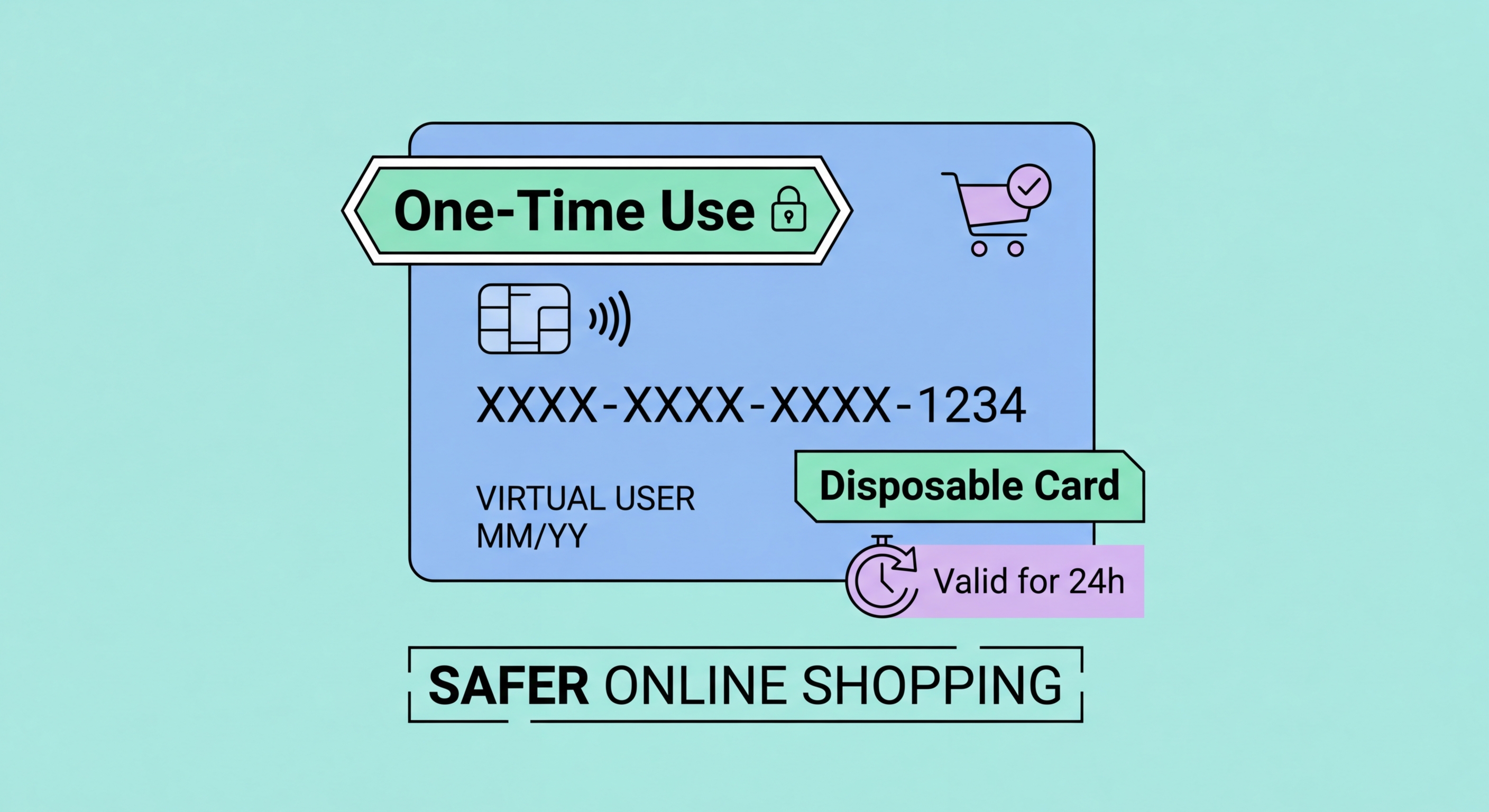
How virtual card numbers protect your real payment details from merchants, data breaches, and online fraud — and how to access them from Hong Kong.
A virtual credit card number is a temporary, randomly generated card number linked to your real credit card account but completely separate from your physical card details. When you use a virtual card number for an online purchase, the merchant stores the virtual number — not your real card number. If that merchant suffers a data breach, only the virtual number is exposed. Depending on how the virtual card was configured, the number may already be expired, merchant-locked, or single-use, making it worthless to any attacker who obtains it.
Virtual cards work by creating a proxy between your actual card and the merchant. Your bank issues the virtual number, sets the parameters (spending limit, merchant restriction, expiry), and maps it to your real account for billing purposes. When a charge is made against the virtual number, your bank processes it normally and bills your real account. From your perspective, charges appear on your statement just like regular transactions, but the merchant never has access to your permanent card details.
The protection extends beyond data breaches. Virtual cards also protect against subscription traps — services that make it easy to subscribe but difficult to cancel. By assigning a unique virtual card number per subscription, you can cancel any unwanted recurring charge simply by deleting or freezing that specific virtual card, without needing to call the merchant, wait on hold, or navigate complex cancellation processes. This makes virtual cards as useful for billing management as they are for security.

Virtual card availability for Hong Kong cardholders has expanded significantly as banks and fintech providers have recognised the security benefits. Several HK card issuers and financial services now offer native virtual card functionality. Citi Hong Kong's virtual card feature generates temporary numbers within the Citi Mobile app for online purchases. Standard Chartered's online shopping virtual card can be generated in the SC Mobile app. American Express Hong Kong offers virtual card numbers for certain cardholders. ZA Bank, a virtual bank, offers virtual card generation capabilities integrated with its digital banking experience.
For cardholders whose primary issuer does not offer virtual card numbers, Apple Pay and Google Pay provide a form of virtual card protection through tokenisation. When you add a credit or debit card to Apple Pay or Google Pay, these platforms generate a Device Account Number (DAN) — a unique, device-specific virtual number — that is used for all transactions through the digital wallet. The merchant is charged to the DAN, not your real card number. This provides protection equivalent to single-use virtual cards for in-person NFC transactions and online purchases at merchants supporting Apple Pay or Google Pay checkout.
Privacy.com and similar virtual card services are available to some international users but may have limited functionality for Hong Kong billing addresses depending on their supported jurisdictions. Revolut and other global neobanks offering virtual card features to HK residents provide another option. When evaluating any virtual card service, confirm it is accessible with a Hong Kong billing address, has clear terms regarding dispute resolution, and that charges to virtual numbers appear cleanly on your linked account statement for record-keeping.

Using virtual cards effectively requires a systematic approach rather than ad-hoc generation. The most protective strategy is using a unique virtual card number for each online merchant or subscription service, enabling merchant locking where available. This creates complete isolation between your spending across different platforms — a breach at one merchant exposes only the virtual number assigned to that merchant, with no value for attacking other merchants or accessing your real card. While this requires slightly more management than using one card everywhere, password managers can store virtual card details alongside login credentials for each site.
For subscription services — streaming platforms, software subscriptions, VPN services, gym memberships — assigning a dedicated virtual card with a monthly spending limit matching the subscription amount provides both security and control. If the service attempts to charge more than expected (fee increases, additional services added without consent), the limit prevents the overcharge. If you wish to cancel, simply close the virtual card rather than engaging with potentially difficult cancellation processes — the subscription will fail on the next billing cycle.
Keeping records of which virtual card is assigned to which merchant is practical administration rather than a security burden. Most virtual card systems allow you to label virtual cards by merchant name in the management interface. Regular auditing — perhaps monthly alongside statement review — of your active virtual cards, closing any assigned to merchants you no longer use, keeps your financial footprint minimal and reduces the surface area for fraud. Virtual cards left active for merchants you've stopped using represent unnecessarily open billing channels.

Virtual cards have limitations that require practical workarounds in some scenarios. Hotels and car rental companies often require a physical card to be presented at check-in and may place pre-authorisation holds that exceed the virtual card's spending limit. Flight bookings where airlines verify the card used online must be presented at the airport may also pose challenges. For these use cases, understanding your virtual card provider's policies regarding merchant category restrictions and pre-authorisation handling is essential before relying on a virtual card for the booking.
Merchant-locked virtual cards may cause issues if a merchant processes refunds through a different merchant identifier than the one used for the original charge — this can result in refunds being declined if the virtual card is locked too tightly. For purchases where you anticipate returns or refunds — clothing, electronics, items frequently returned — using a more flexible virtual card or your physical card with an established merchant's robust return process may be more practical. Single-use virtual cards are specifically problematic for return scenarios because the number is invalidated after the first charge, making refunds to that number impossible.
Dispute resolution with virtual cards generally follows the same process as physical cards — you dispute through your card issuer, providing the virtual card number used. Most card issuers' dispute teams are familiar with virtual card products and handle them routinely. However, keeping records of which virtual number was used for which purchase (receipts, confirmation emails) is more important with virtual cards than with physical cards, because the unfamiliar card number on a merchant receipt may not match anything in your wallet for reference. Good record-keeping resolves this completely.
