Social Media Security for Hong Kong Businesses

How to secure your business social media presence on Facebook, Instagram, LinkedIn, and WeChat — covering account security, impersonation response, employee social media policies, and protecting your brand and reputation online.

Social media security Hong Kong businesses
1Business Account Security

Securing Business Social Media Accounts in Hong Kong

Business social media accounts — Facebook Pages, Instagram business accounts, LinkedIn company pages, and WeChat Official Accounts — are valuable assets that attackers actively seek to compromise. A compromised business Facebook Page can be used to push fraudulent advertisements charging your linked payment methods, post content that damages your brand reputation, message customers with scam content, or be held for ransom. A compromised LinkedIn company account can be used to recruit fraudulent job applicants, conduct BEC reconnaissance on your employees, or post misleading content about your business. In Hong Kong's social media landscape — where Facebook, Instagram, WhatsApp, and WeChat all have significant business user bases — account security for each platform deserves specific attention.

Facebook and Instagram business account security requires protecting both the Meta Business Suite account and the personal accounts of all admins with access to your business assets. A compromised admin personal account grants access to all business assets that admin controls — your Facebook Page, Instagram account, ad accounts, and pixel. Enable two-factor authentication on all Meta personal accounts with business access, preferably using an authenticator app rather than SMS (SIM swapping attacks against Hong Kong phone numbers have been used to bypass SMS 2FA). Review Meta Business Suite admin access regularly, removing former employees and limiting the number of full admin accounts to reduce the attack surface. Facebook's Business Account Security Check provides a guided review of security settings in Business Manager.

WeChat Official Account security is particularly relevant for Hong Kong businesses targeting Mainland Chinese customers or operating in the Greater Bay Area. WeChat Official Account compromise can expose customer messaging histories, enable fraudulent communications to followers, and damage relationships with customers who rely on WeChat as their primary communication channel with your business. WeChat Official Accounts should have login notifications enabled, administrative access limited to necessary personnel with dedicated WeChat accounts rather than personal accounts, and regular review of connected applications and API authorisations. WeChat's service provider ecosystem (third-party tools accessing your Official Account via API) represents additional supply chain risk that deserves periodic review.

  • 2FA on all admin accounts: Enable two-factor authentication on every personal account with business social media admin access — compromised personal accounts expose all linked business assets
  • Authenticator app over SMS: Use authenticator apps (Google Authenticator, Microsoft Authenticator) rather than SMS 2FA — SIM swapping attacks can bypass SMS 2FA
  • Minimise admin count: Limit business social media admins to those with genuine operational need — fewer admins means smaller attack surface
  • Regular admin access audit: Review admin access for all business social accounts quarterly — remove former employees, contractors, and agencies whose relationships have ended
  • Meta Business Security Check: Run Facebook's Business Account Security Check periodically to identify security configuration gaps in your Meta business assets
  • Dedicated business credentials: Use business email addresses rather than personal email for social media business account registration — prevents access loss when personal accounts close
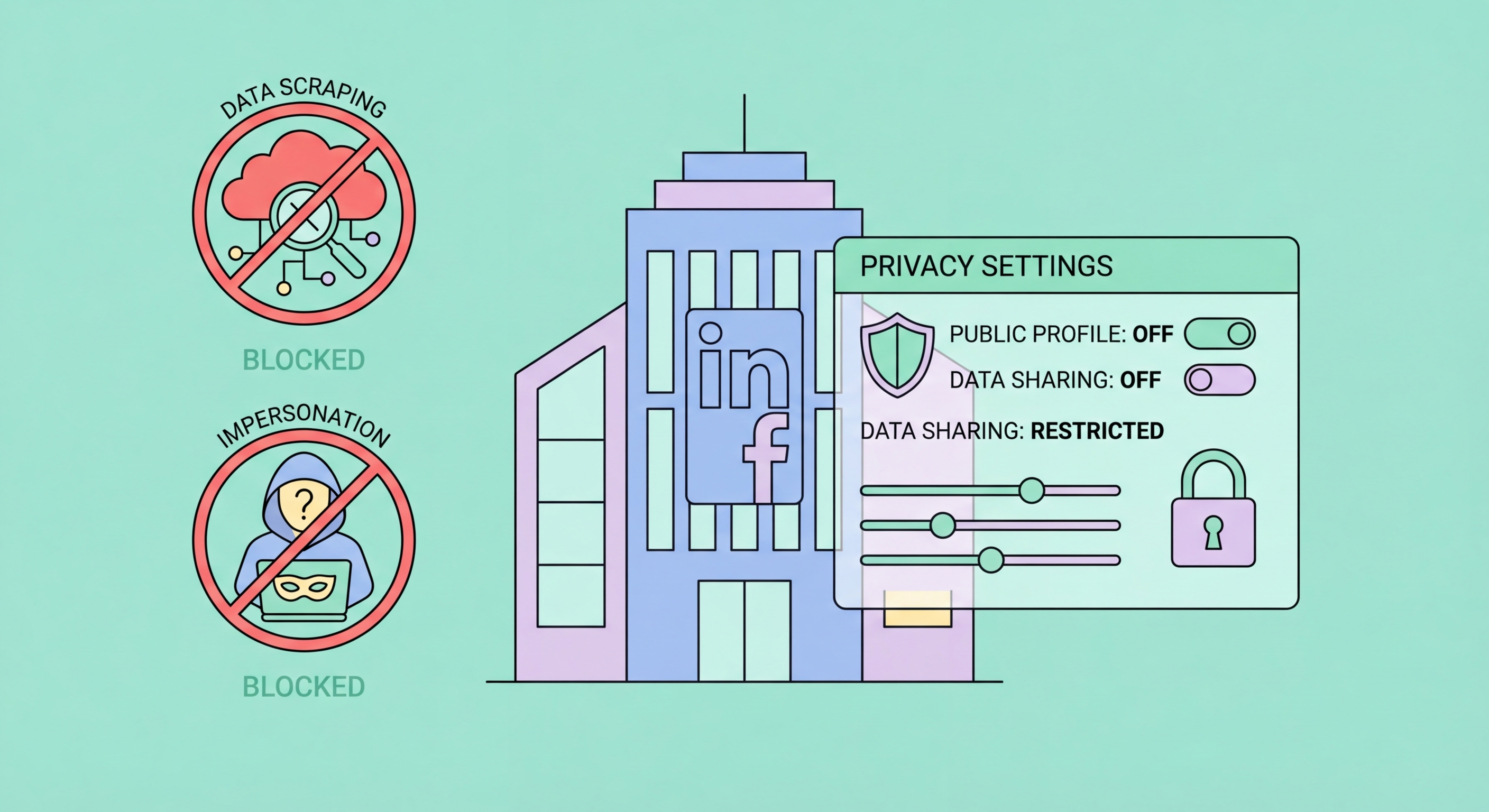
Business social media account security
2Impersonation and Brand Protection

Defending Against Social Media Impersonation in HK

Social media impersonation — where fraudsters create fake accounts that impersonate your business to scam your customers — is one of the most common and damaging social media security threats facing Hong Kong businesses. Fake Facebook Pages and Instagram accounts impersonating local banks, retailers, restaurants, and service businesses in HK are used to run fraudulent giveaway scams, collect deposits for non-existent products, phish customer credentials through fake login pages, and conduct customer service fraud where customers seeking genuine help are directed to scammers. The HKPF receives frequent reports of businesses whose customers have been victimised by social media impersonation scams before the businesses were even aware the fake accounts existed.

Proactive monitoring for impersonation is essential for Hong Kong businesses with any public brand presence. Set up Google Alerts for your business name and common variations — impersonation accounts sometimes appear in search results. Periodically search for your business name on each major platform to identify fake accounts. For businesses with significant brand value, social media monitoring tools including Brandwatch, Mention, and Hootsuite Insights provide continuous monitoring for mentions and potential impersonation. Many platform verification programmes — Meta's Blue Checkmark, LinkedIn Page verification — provide visible authenticity signals that help customers distinguish your official account from fakes, though verification criteria vary by platform and account type.

When impersonation accounts are identified, prompt reporting and takedown action is critical. Each platform provides specific reporting mechanisms for impersonation: Facebook/Instagram Business Impersonation reports through Meta's Intellectual Property Report form, LinkedIn company page impersonation reports through LinkedIn's Trust and Safety team, and Twitter/X impersonation reports through the platform's reporting system. Document the impersonating account thoroughly (screenshots with URLs and dates) before reporting, as accounts are sometimes removed before your report is formally reviewed. Notify your customers through your genuine channels when impersonation accounts are active — customer awareness is the most immediate protection while platform takedown proceeds.

  • Google Alerts for brand name: Set up Google Alerts for your business name and common variations — detects impersonation accounts that appear in search results
  • Periodic platform search: Regularly search for your business name on Facebook, Instagram, and LinkedIn to identify unauthorised accounts using your brand
  • Platform verification: Apply for platform verification programmes where available — verification badges signal authenticity to customers navigating between real and fake accounts
  • Impersonation report documentation: Screenshot all details of impersonating accounts before reporting — accounts may be removed before your report is reviewed
  • Customer notification when impersonated: Alert customers through your genuine channels when impersonation accounts are active — awareness is the most immediate protection
  • Claim your brand username: Register your business name as the username on all major platforms — preventing squatting that complicates impersonation takedowns
Brand impersonation on social media
3Employee Social Media Policy

Employee Social Media Policy for Hong Kong Businesses

Employee social media activity creates information security risks for Hong Kong businesses that extend beyond the business's own social media accounts. Employees posting about their work — describing systems, mentioning colleagues, sharing workplace photos, or discussing upcoming business events — provide intelligence that sophisticated attackers use for targeted attacks. A LinkedIn post from an employee mentioning that their company is migrating to a new ERP system reveals both the ERP vendor (a potential attack vector) and that the IT team is likely stretched. An Instagram story showing a company event venue provides physical security intelligence. OSINT (open source intelligence) gathering from employee social media is a standard first step in targeted attacks on HK businesses.

A social media policy for Hong Kong employees should address: what categories of business information must not be shared on personal social media (system details, client information, financial data, merger/acquisition activity, regulatory matters); how employees should represent their employer relationship on platforms like LinkedIn (what job title and description is appropriate); the use of company logos, trademarks, and confidential information in personal profiles; the responsibility to report to management any social media contact from unknown parties seeking business information; and the platforms and usage guidelines for business social media managers. The policy should be proportionate — overly restrictive policies generate non-compliance — and should explain the security rationale rather than just mandating restrictions.

Phishing via professional social networks — particularly LinkedIn — is an increasing threat for Hong Kong businesses. LinkedIn's professional context makes users more trusting of connection requests and messages from apparent industry contacts, recruitment opportunities, and professional enquiries. Attackers use LinkedIn to identify and contact employees with system access, gather intelligence on technology vendors and internal projects, and build rapport before delivering phishing content. The 2020 SolarWinds supply chain attack reconnaissance involved LinkedIn profiling of target organisations. Employee training should specifically address professional network phishing — how to verify connection requests from unknown people, how to handle unsolicited technical enquiries, and the specific risk of recruitment-themed approaches.

  • Information classification on social media: Policy must specify what business information cannot be shared on personal social media — system details, client information, financial data
  • LinkedIn professional representation: Define how employees should represent their employer, role, and responsibilities on LinkedIn — oversharing creates targeting intelligence for attackers
  • Workplace photo restrictions: Restrict posting of workplace interior photos that reveal security controls, server room layouts, or sensitive information visible in the background
  • LinkedIn phishing awareness: Train employees specifically on LinkedIn phishing — unsolicited technical enquiries, fake recruitment, and connection requests from suspicious profiles
  • Incident reporting obligation: Employees must report unusual social media contact seeking business information — social engineering reconnaissance should be reported to management
  • Social media manager role definition: Define who is authorised to post on behalf of the business and what approval process applies to business social media content
Employee social media policy
4Crisis Management

Social Media Crisis Management After Security Incidents

Cybersecurity incidents frequently generate social media crises — customers posting publicly about a data breach, media coverage of a ransomware attack shared virally, or social media speculation about an account compromise. Managing the social media dimension of a cybersecurity incident requires a crisis communication plan that addresses: who speaks for the business on social media during an incident, what factual information can be shared at each stage of the response, what tone and format is appropriate for public communications, and how customer questions and complaints via social media will be handled during the crisis. Silence — failing to acknowledge an incident that customers and the public are already discussing — typically worsens perception more than prompt factual communication.

The first social media response to a security incident should be prompt (within hours of public awareness, not days), factual (based on confirmed information, not speculation), empathetic (acknowledging customer concern without legal admissions), and action-oriented (communicating what you are doing, not just what happened). Generic corporate statements that acknowledge an "issue" without providing any substantive information are perceived as evasive and generate further negative sentiment. Conversely, oversharing details that are under active investigation or could assist attackers is also harmful. Coordinating social media response with legal counsel, your cyber insurer's PR resources, and internal communications ensures consistency across all communication channels.

Preparing social media crisis communication templates before any incident — as part of your incident response plan — allows for faster, more consistent response when an incident actually occurs. Templates for different incident scenarios (data breach affecting customer data, ransomware causing service disruption, BEC fraud affecting customers, social media account compromise) can be adapted quickly to the specific facts and published without the delays inherent in drafting from scratch under crisis conditions. Pre-identify which team members have authority to post on behalf of the business during a crisis — do not rely on normal approval workflows that may be unavailable or too slow when a cyberincident has disrupted normal operations.

  • Prompt acknowledgement: Respond publicly within hours of incidents becoming public — silence amplifies negative sentiment more than honest, limited initial statements
  • Designated crisis spokesperson: Pre-designate who speaks for the business on social media during incidents — single-voice consistency prevents contradictory messaging
  • Pre-drafted response templates: Prepare social media crisis statement templates for likely incident scenarios as part of your IRP — allows faster, more considered responses
  • Customer message management: Designate team members to monitor and respond to customer social media messages during incidents — unacknowledged customer complaints escalate public sentiment
  • Coordinate with legal and PR: All public statements during active incidents should be reviewed by legal counsel — public admissions create liability that carefully worded statements avoid
  • Post-incident communication: Follow up with customers after incident resolution — communicating what happened, what data was affected, and what improvements you have made rebuilds trust
Social media crisis management

Protect Your Business Brand on Social Media

Explore our complete Business Cybersecurity guide for all security and reputational risk guidance for Hong Kong businesses online.

Related VPN Articles